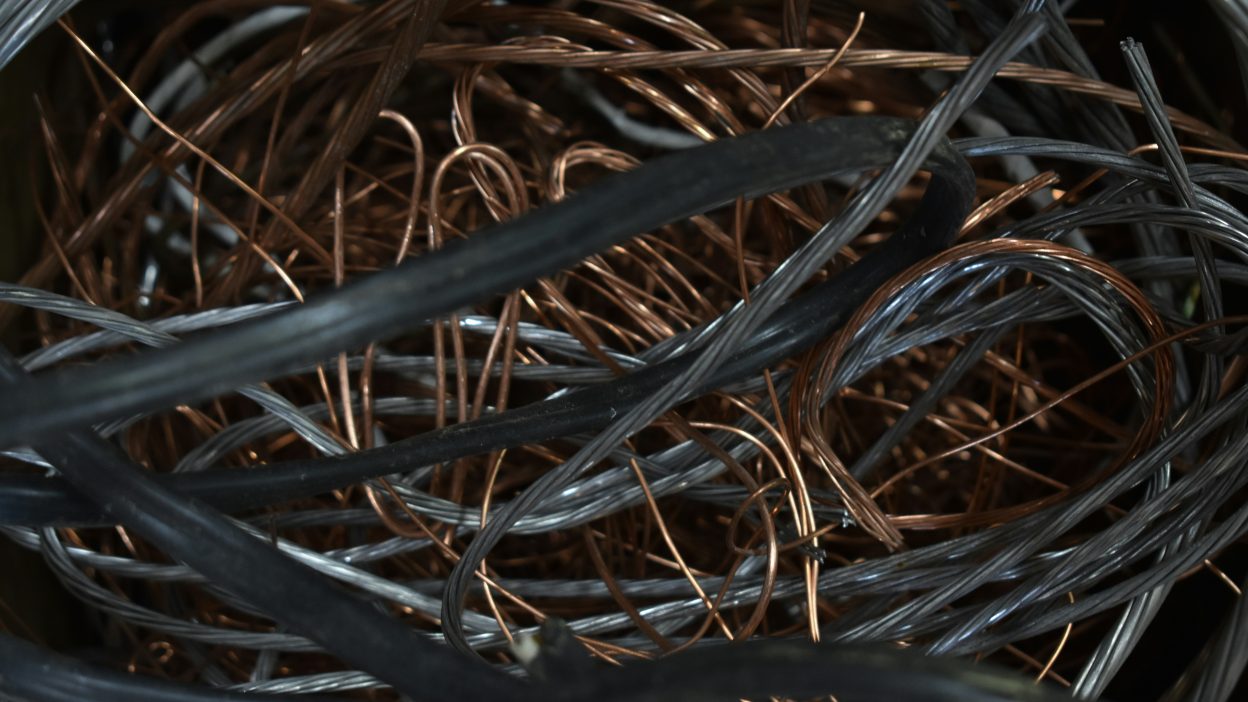
If you have a pile of leftover wire sitting in your garage or job site and you are wondering whether is it worth stripping copper wire in Dayton, OH before hauling it to a scrap yard, you are not alone. This is one of the most common questions among electricians, contractors, and serious DIYers. The answer depends on a few key variables: the type of wire you have, how much of it there is, and how you value your own time. Before you reach for the wire stripper, it pays to do the math. A full-service metal recycling center can often process your insulated wire and pay you a fair rate without you breaking a sweat.
This guide walks you through the real numbers, the situations where stripping makes sense, and when it is simply not worth the effort.
Understanding the Price Gap: Bare Bright vs. Insulated Copper
The entire stripping debate comes down to one thing: the price difference between bare bright copper and insulated copper wire at the scrap yard.
Bare bright copper is the highest grade of scrap copper. It is clean, uncoated, unalloyed, and uninsulated wire that is at least 16 gauge or larger. Because it requires no further processing, scrap yards pay a premium for it. As of early 2025, bare bright copper generally fetches somewhere in the range of $3.50 to $4.00 per pound depending on the market and location, according to iScrap App, a widely used resource for real-time scrap metal pricing.
Insulated copper wire, by contrast, is paid out at a significantly lower rate because the yard has to account for the weight and processing cost of the insulation. Depending on the thickness of the wire and the insulation type, you might receive anywhere from 50% to 80% of the bare bright price for insulated wire. A common benchmark is that #1 insulated copper wire pays around $2.00 to $2.60 per pound.
So the margin between bare bright and insulated copper is real. The question is whether that margin is large enough to justify your labor.
The Breakeven Calculation: When Does Stripping Pay Off?
Let us run through a simple breakeven calculation. Suppose bare bright copper is paying $3.80 per pound and insulated wire is paying $2.20 per pound. That is a difference of $1.60 per pound.
Now consider that insulated wire does not become a pound of copper when stripped. Insulation makes up a significant portion of the total weight. Depending on the wire gauge and insulation thickness, copper may only represent 50% to 75% of the total weight of insulated wire. This is known as the “recovery rate.”
Here is a simplified example:
- You have 100 pounds of insulated copper wire
- At $2.20/lb, you would receive $220 by selling it as-is
- If the wire has a 65% copper recovery rate, stripping yields roughly 65 pounds of bare bright
- At $3.80/lb, 65 pounds of bare bright earns you $247
- Net gain from stripping: approximately $27
For 100 pounds of wire, you might gain about $27. If it takes you two hours to strip that wire by hand, your effective pay rate is roughly $13.50 per hour. In many cases, that is below minimum wage or far below what your time is worth professionally.
That said, if you have a mechanical wire stripper and several hundred pounds of wire, the math can shift in your favor quickly.
Wire Gauge Matters More Than You Think
Not all wire is created equal when it comes to the stripping decision. Wire gauge is arguably the most important factor.
Thick Cable (250 MCM and Above): Usually Worth Stripping
Large-gauge cable such as 250 MCM, 350 MCM, 500 MCM, and similar sizes used in industrial and commercial electrical work contains a high ratio of copper to insulation. The insulation is thicker, but the copper conductor inside is massive. Recovery rates on this type of cable can be 75% to 85% or higher.
With this type of wire, stripping even a modest quantity can result in a meaningful payout difference. If you are an electrician who regularly pulls large cable on commercial projects, investing in a quality mechanical stripper makes economic sense. The Copper Development Association provides detailed technical information on wire construction that can help you estimate recovery rates for specific cable types.
Medium Gauge Wire (4 AWG to 2/0): Situational
Wire in this range is worth considering for stripping, especially if you have a mechanical stripper and a substantial quantity. The recovery rates are moderate, and the labor per pound is manageable. Run the numbers based on current local scrap prices before committing.
Thin Wire (14 AWG Romex and Similar): Usually Not Worth It
Standard 14-gauge or 12-gauge Romex, the type used in residential electrical work, is where the math almost never works in the stripper’s favor. The copper conductor is thin, the insulation is proportionally heavy, and hand-stripping this wire is slow and tedious.
Consider that a 250-foot roll of 14-2 Romex weighs approximately 20 pounds, but the actual copper content might only be around 8 to 9 pounds. You would need to strip a large amount of Romex to see any meaningful payout improvement, and the time involved rarely justifies the gain.
According to scrap metal forums and experienced recyclers on sites like Reddit’s r/Scrap community, thin Romex is one of the most commonly cited examples of wire that is simply not worth stripping for the average person.
Safety Considerations You Should Not Ignore
Beyond the math, there are genuine safety concerns with wire stripping that deserve attention.
Stripping wire with a utility knife introduces the risk of cuts. Mechanical strippers reduce this risk but still require careful operation. Beyond physical injury, older wire may contain insulation made from materials that release harmful dust or particles when cut. PVC insulation, while generally stable, should not be burned off copper wire. Burning insulation to strip wire is illegal in most jurisdictions and releases toxic gases including hydrogen chloride and dioxins, according to the U.S. Environmental Protection Agency. It also permanently disqualifies the copper from achieving bare bright status, since fire-damaged or burnt copper receives a much lower scrap grade.
Additionally, stripping wire outdoors in variable weather conditions can slow you down considerably and create cleanup headaches.
The Full-Service Scrap Yard Alternative
Here is a point that many people overlook: a reputable, full-service scrap yard will accept your insulated wire as-is and process it themselves. They have industrial-grade wire stripping equipment that can process wire far faster than any hand operation. The slight price difference you might capture by stripping the wire yourself is often offset by:
- The time you save
- The physical labor you avoid
- The hazard exposure you eliminate
- The convenience of a single drop-off
If you are in the Dayton, Ohio area and want to skip the stripping entirely, you can find a scrap metal recycler near Dayton that handles insulated wire, Romex, and large-gauge commercial cable without requiring you to pre-process anything. Full-service yards provide transparent pricing based on wire type and condition, so you know exactly what you are getting before you unload your truck.
For most homeowners and occasional recyclers, this is genuinely the smarter path. For high-volume electricians and contractors, it is worth building a relationship with your local yard to understand their pricing tiers for different wire types.
Practical Tips If You Do Decide to Strip
If you have run the numbers and determined that stripping makes sense for your situation, here are a few practical suggestions to make the process more efficient and safe.
Use a mechanical wire stripper rather than a knife whenever possible. Tabletop models designed for scrap wire can process wire much faster than hand tools and produce cleaner results. Separate your wire by gauge before you begin so you can make targeted decisions about what to strip and what to sell as-is. Keep stripped copper clean and dry, since contamination or oxidation can reduce its grade. Store stripped copper away from moisture to prevent the green oxidation that can knock it down from bare bright to a lower grade.
Finally, weigh your wire before and after stripping a sample batch to calculate your actual recovery rate. This real-world data will be more accurate than any published estimate and will help you make smarter decisions on future batches.
Wrapping It All Up: The Bottom Line on Stripping Copper Wire
Whether stripping copper wire is worth it comes down to a straightforward calculation: the price gap between bare bright and insulated wire, your actual recovery rate, and the value of your time. For thick commercial cable, stripping is often a smart move. For residential Romex and thin gauge wire, the numbers rarely add up. For anyone who values their time or is working with a mixed or modest pile of wire, bringing it directly to a full-service scrap yard is usually the fastest and most practical choice.
The key takeaway is that there is no universal answer. Run your own numbers with current local prices, know your wire gauge, and be honest about how you value your time. When in doubt, let the professionals handle the processing.
Frequently Asked Questions
Q1: What is the difference between bare bright copper and #1 copper?
Bare bright copper is the highest scrap grade and refers to uncoated, uninsulated, clean copper wire that is 16 gauge or larger with no solder, paint, or plating. Number 1 copper includes heavier copper pipe, bus bars, and wire that may have some minimal coating but is still relatively clean. Bare bright consistently commands the highest price per pound at most scrap yards.
Q2: Is it illegal to burn wire insulation off copper to speed up stripping?
Yes, in most areas burning wire insulation is illegal and subject to fines. Beyond the legal issue, burning insulation releases toxic chemicals and leaves a residue on the copper that disqualifies it from bare bright status. Burned copper receives a significantly lower scrap grade and price, which defeats the purpose entirely.
Q3: How do I find out what scrap yards are paying for copper wire today?
Real-time copper scrap prices vary by location and market conditions. Resources like iScrap App and ScrapMonster publish price ranges based on user submissions from yards across the country. Your best bet is always to call your local yard directly for their current posted prices before making a trip.
Q4: Does it matter how long the wire is when scrapping it?
Length itself does not affect price at most yards, but form does. Wire bundled neatly and free of non-copper attachments like connectors, junction boxes, and breakers will typically be accepted more cleanly. Some yards may require you to remove large attached hardware before they will grade the wire at a copper rate.
Q5: What types of wire are not worth stripping under almost any circumstances?
Extension cords, appliance cords, lamp wire, telephone wire, and coaxial cable all have very low copper content relative to their total weight. These are generally priced at the lowest insulated wire grades and rarely make sense to strip manually. Christmas light strings, in particular, have nearly no recoverable copper value after the time and effort of stripping.