
When Cincinnati summers push temperatures above 90°F, the last thing any driver wants is car AC blowing warm air in Cincinnati, OH. Whether you are stuck in traffic on I-75 or running errands across town, a malfunctioning air conditioning system can make every minute behind the wheel feel unbearable. Before you assume the worst and brace for a massive repair bill, it helps to understand what actually causes an AC system to stop cooling. Many of the most common culprits are diagnosable before you ever set foot in a shop. If you are already dealing with this problem, professional car AC repair can restore your comfort quickly and prevent small issues from turning into expensive ones.
This guide walks through the five most frequent reasons a car AC blows warm air, explains how each problem works, and helps you understand what steps make sense before and after a shop visit.
How a Car AC System Works (A Quick Overview)
Your vehicle’s air conditioning system operates as a closed-loop refrigerant circuit. The compressor pressurizes refrigerant, which travels to the condenser (located at the front of the vehicle), releases heat, and then flows through an expansion valve before reaching the evaporator inside the cabin. As warm cabin air passes over the cold evaporator coil, heat is absorbed and cool air is pushed through your vents.
When any component in that loop fails or refrigerant levels drop, the system cannot complete the heat-exchange process, and you end up with warm or lukewarm air from the vents.
5 Common Reasons Your Car AC Is Blowing Warm Air
1. Low Refrigerant or a Refrigerant Leak
Low refrigerant is one of the most frequently cited causes of a car AC blowing warm air. Refrigerant does not get “used up” like fuel. If your system is low, it almost always means there is a leak somewhere in the system.
How to tell the difference between low refrigerant and an active leak:
A system that has gradually lost refrigerant over one or two seasons typically shows a slow decline in cooling performance. You might notice the air is cold in the morning but barely cool by midday. An active leak, on the other hand, can cause a sudden and complete loss of cooling. Technicians use UV dye and electronic leak detectors to pinpoint the source, which could be a failed O-ring, a cracked hose, a leaking Schrader valve, or a damaged evaporator or condenser.
Why DIY recharge kits can cause more harm than good:
Canned refrigerant kits sold at auto parts stores are tempting when the fix seems simple. However, these kits typically include stop-leak additives that can clog the tiny passages inside your compressor and expansion valve. Overcharging the system is also a real risk when you are not using professional gauges. An overcharged system can damage the compressor, which is one of the most expensive components to replace. According to Consumer Reports, refrigerant handling and leak repairs are best left to certified technicians who can recover, recycle, and properly recharge the system.
2. Compressor Clutch Not Engaging
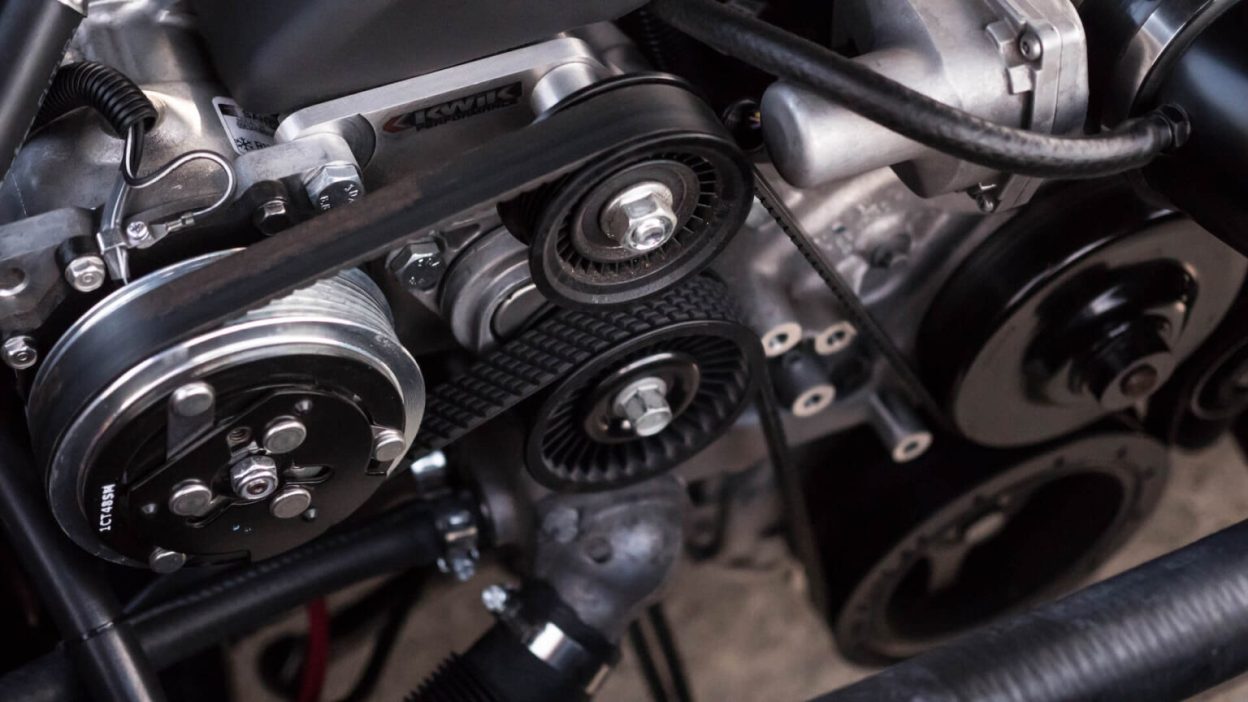
The AC compressor is driven by a belt connected to the engine, but it does not run continuously. A magnetic clutch engages and disengages the compressor as needed. When that clutch fails to engage, the refrigerant circuit never gets pressurized and your AC blows nothing but warm air.
Common reasons the compressor clutch will not engage include:
- A blown fuse in the AC circuit
- A failed AC relay
- A faulty pressure switch that is detecting incorrect refrigerant pressure
- Low refrigerant triggering a protective shutoff
- A burned-out clutch coil
Many drivers and even some technicians initially misdiagnose a clutch engagement problem as a refrigerant issue because the symptoms look identical from inside the car. A quick visual inspection under the hood while the AC is set to max can reveal whether the clutch plate at the front of the compressor is spinning. If the outer pulley spins freely but the inner clutch plate does not engage, an electrical fault is likely the cause.
Fuses and relays are inexpensive fixes, but a failed clutch or compressor requires more involved labor and parts.
3. Condenser Problems
The condenser sits at the very front of your vehicle, usually in front of the radiator. Its job is to release the heat that the refrigerant absorbed from the cabin. Because of its location, the condenser is vulnerable to road debris, bugs, and physical damage from minor accidents.
A clogged or damaged condenser cannot release heat efficiently, which causes refrigerant pressure to build and cooling performance to drop. Signs of condenser trouble include:
- Warm air from vents even when refrigerant levels are correct
- Visible damage or bent fins on the condenser
- AC that works better at highway speeds (when more airflow reaches the condenser) than at idle
In some cases, a condenser can develop an internal leak, which combines both a refrigerant leak and a heat-transfer problem in a single component. Condenser replacement is generally a moderate repair, though labor time varies significantly by vehicle make and model.
4. Blend Door Actuator Failure
Not every warm air complaint is a refrigerant or mechanical issue. Sometimes the air conditioning system itself is functioning perfectly, but the air never gets directed through the cold evaporator before reaching the vents. The blend door actuator controls a flap inside the HVAC box that determines the mix of hot and cold air entering the cabin.
When the actuator fails, the blend door can get stuck in the full-heat position. Drivers often describe this as the AC “blowing air but not cooling.” The airflow may feel normal, but it ranges from lukewarm to outright hot regardless of what temperature you select.
A clue that the blend door actuator is the problem is a clicking or knocking noise coming from behind the dashboard when you adjust the temperature. Actuator replacement is typically a straightforward job, though access can be challenging on some vehicles because the HVAC box is buried deep in the dashboard.
5. Electrical Issues and Aging Wiring
Modern vehicles rely on a complex web of sensors, control modules, and wiring to manage the AC system. A faulty AC pressure sensor can tell the system there is too much or too little refrigerant, triggering a shutoff even when levels are normal. A failing blower motor resistor can reduce fan speed to the point where airflow is nearly undetectable. A corroded ground connection can cause intermittent failures that are maddeningly difficult to reproduce in a shop.
Older vehicles in the Cincinnati area are particularly prone to electrical AC problems because heat, humidity, and road salt accelerate connector corrosion. When a car intermittently blows warm and then cold air without any apparent pattern, electrical diagnostics are often the right starting point.
R-134a vs. R-1234yf: Why Your Refrigerant Type Matters
If your vehicle was manufactured before 2014, it almost certainly uses R-134a refrigerant. Vehicles manufactured from roughly 2015 onward, particularly those from European brands and increasingly from domestic manufacturers, use R-1234yf, a newer refrigerant with a lower environmental impact.
The practical difference for vehicle owners comes down to cost. R-1234yf refrigerant costs significantly more per pound than R-134a, and the equipment required to handle it is different. A repair that costs a certain amount on an older vehicle can cost noticeably more on a newer one simply because of refrigerant costs.
According to the U.S. Environmental Protection Agency, shops handling either refrigerant must use certified equipment and recovery procedures. If you are bringing your vehicle in for an AC recharge or leak repair, asking which refrigerant your car requires will help you understand the estimate you receive.
Vehicles that commonly use R-1234yf in the Cincinnati area include newer model years of the Ford F-150, Chevrolet Silverado, Honda CR-V, and most vehicles with a model year of 2017 or newer.
When to Stop Troubleshooting and Get Professional Help
Some AC problems, such as a blown fuse or a clearly clogged cabin air filter, are accessible to a determined DIYer. Most others require recovery equipment, leak detection tools, manifold gauge sets, and the knowledge to interpret what those gauges are telling you.
If your AC is blowing warm air and basic checks (fuses, belt condition, visible leaks under the hood) do not reveal an obvious answer, professional diagnosis is the right next step. Continuing to run a compromised AC system can damage the compressor, which runs dry without adequate refrigerant lubrication and can fail completely if operated that way for extended periods.
For Cincinnati drivers dealing with this issue, finding a qualified shop that performs a full system diagnosis rather than a simple recharge is worth the investment. You can find experienced local technicians through Google Maps to check reviews and locate a trusted shop near you.
Wrapping Up: Stay Cool and Stay Ahead of AC Problems
A car AC blowing warm air is rarely just an inconvenience. Left unaddressed during a Cincinnati summer, it can become a safety concern during extreme heat and turn into a significantly larger repair bill as secondary components suffer. Understanding the five main causes covered here, low refrigerant, a compressor clutch that will not engage, condenser damage, a failed blend door actuator, and electrical faults, gives you the background to have an informed conversation with a technician and make smarter decisions about your repair options.
Whether your system needs a simple fuse replacement or a full compressor and refrigerant system overhaul, early diagnosis is always the most cost-effective path. Do not wait until the middle of August to find out your AC has a serious problem.
Frequently Asked Questions
Q: Can I drive my car if the AC is blowing warm air?
Yes, a failing AC system does not prevent the vehicle from being driven safely in most cases. However, during extreme heat, cabin temperatures can become dangerous, particularly for children and pets. It is also worth noting that running the AC compressor with low refrigerant can cause compressor damage, so it may be worth switching the system off entirely until it can be diagnosed.
Q: How much does it cost to fix a car AC that is blowing warm air?
Costs vary significantly based on the root cause. A refrigerant recharge after a minor leak repair might run between $150 and $300. A compressor replacement can range from $500 to $1,500 or more depending on the vehicle. Getting a proper diagnosis before authorizing repairs helps avoid paying for work that does not address the actual problem.
Q: How long does an AC recharge last?
A properly sealed AC system should hold its refrigerant charge for many years. If you find yourself needing a recharge every one or two seasons, there is almost certainly a leak that needs to be identified and repaired rather than simply adding refrigerant each year.
Q: Why does my car AC work fine in the morning but blow warm air in the afternoon?
This pattern often points to a refrigerant level that is low but not completely empty, a condenser that struggles to reject heat when ambient temperatures peak in the afternoon, or an intermittent electrical fault that worsens with heat. Having the system checked when the problem is actively occurring gives a technician the best chance of pinpointing the cause.
Q: Does my car AC use R-134a or R-1234yf refrigerant?
Most vehicles manufactured before 2015 use R-134a. Vehicles from 2015 onward increasingly use R-1234yf, and by 2021 it became the standard for most new vehicles sold in the United States. The refrigerant type is usually listed on a sticker in the engine compartment near the AC service ports. Your owner’s manual will also specify which refrigerant your system requires.
Q: What is the first thing to check when car AC stops blowing cold air?
Start with the basics: check that the AC is switched on and set to a low temperature, verify the cabin air filter is not severely clogged, and look under the hood to confirm the AC compressor clutch is engaging. Also check the fuse box for any blown AC-related fuses. If none of those reveal an obvious problem, professional diagnosis is the appropriate next step.