
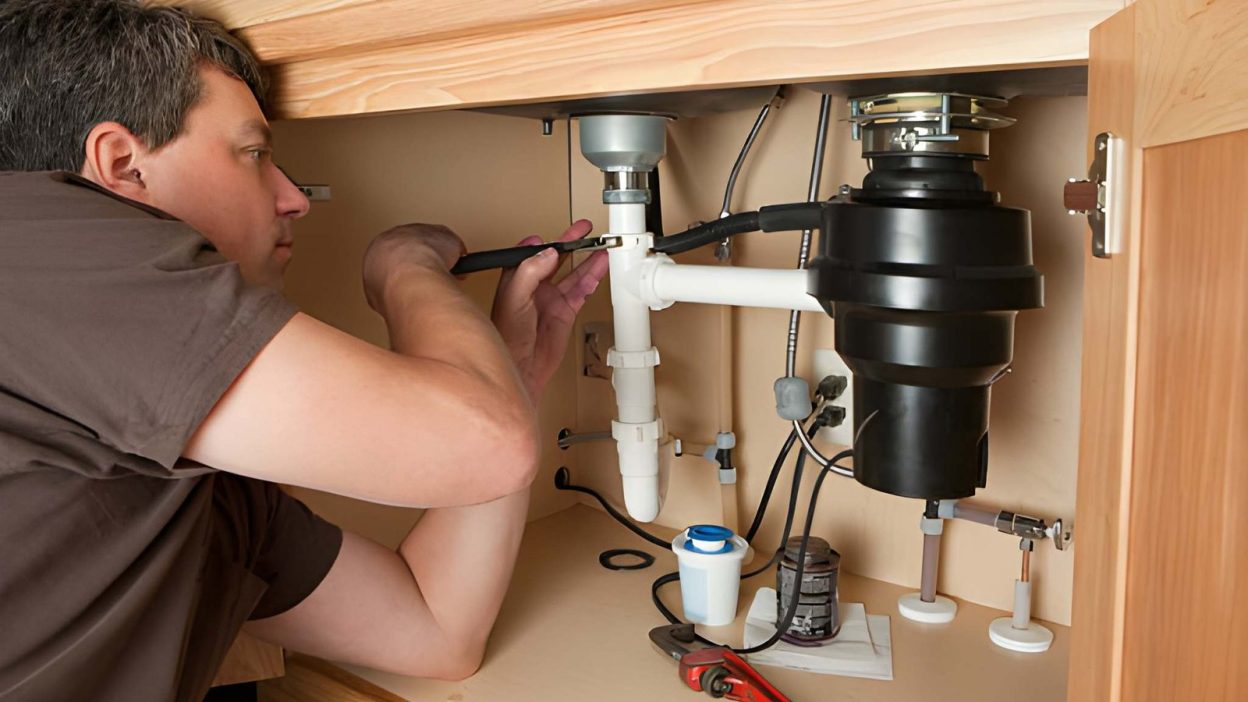
A puddle forming beneath your kitchen sink is never a welcome sight. When that puddle keeps coming back no matter how many times you wipe it up, there is a good chance your garbage disposal is the source of the problem. A garbage disposal leaking from the bottom in Atlanta, GA is one of the most common calls plumbers receive, and it almost always signals a serious internal issue rather than a simple fix. Understanding why this happens, how to pinpoint the exact source, and what your repair or replacement options look like can save you time, money, and a lot of frustration.
If you are already dealing with water pooling under the sink, it may be time to consider professional garbage disposal installation to get things back in working order. Before you make that call, though, it helps to understand exactly what is going on inside the unit.
Why a Leaking Garbage Disposal Deserves Immediate Attention
A leaking garbage disposal is not just a nuisance. Left unchecked, the moisture can damage cabinet wood, encourage mold growth, and eventually compromise the structural integrity of your under-sink area. According to the Environmental Protection Agency, household leaks waste nearly 1 trillion gallons of water annually in the United States, and many of those leaks originate from appliances and fixtures that homeowners delay addressing.
Acting quickly matters. The first step is identifying exactly where the water is coming from, because the location of the leak tells you a great deal about the severity of the problem and the best path forward.
How to Identify the Source of the Leak
Not every garbage disposal leak comes from the same place. There are three primary locations where leaks commonly originate, and each one has different implications for repair.
Leaks from the Sink Flange
The sink flange is the metal ring that connects the garbage disposal to the drain opening at the bottom of your sink basin. It is held in place with a mounting assembly and sealed with plumber’s putty. Over time, the putty dries out and cracks, or the mounting hardware loosens due to regular vibration from the disposal motor.
To check for a flange leak, dry the area thoroughly and then fill the sink with a couple of inches of water. Watch closely around the top of the disposal where it meets the sink. If water seeps down from that connection point, the flange is likely the culprit.
The good news here is that a flange leak is one of the more repairable issues. A plumber can often reseat the flange with fresh plumber’s putty and tighten the mounting hardware without replacing the entire unit.
Leaks from the Dishwasher Connection
Many garbage disposals have a small inlet port on the side where a dishwasher drain hose connects. This connection is secured with a hose clamp, and over time that clamp can loosen or the hose itself can crack and degrade.
To identify this type of leak, run your dishwasher and observe the side of the disposal during the drain cycle. If water drips from the hose connection point, you are dealing with a dishwasher inlet leak rather than an internal failure.
Like a flange leak, a dishwasher connection leak is generally fixable. Tightening the clamp or replacing the drain hose is a straightforward repair that does not require a full unit replacement.
Leaks from the Bottom of the Unit
This is where things get more serious. If water is dripping directly from the bottom of the garbage disposal unit itself, the problem is almost certainly internal. Inside every garbage disposal is a set of seals that protect the motor from the water that flows through the grinding chamber. The most important of these is the internal seal that sits between the motor and the grinding components.
When this seal fails, water bypasses it and leaks out through the reset button or other openings at the base of the unit. You can confirm this is the source by drying everything completely, running water into the disposal, and watching to see if drops form at the very bottom of the unit with no connection to the flange or dishwasher hose.
Why Bottom Leaks Almost Always Mean Replacement
A bottom leak caused by a failed internal seal is technically repairable in the sense that the seal can be replaced. However, from a practical and cost standpoint, replacement is almost always the smarter choice for several important reasons.
Seal replacement is labor-intensive. Accessing and replacing the internal seal requires essentially disassembling the disposal. The labor cost alone often approaches or exceeds the price of a new mid-range unit.
Age and wear go hand in hand. Internal seals do not fail in new disposals. By the time the seal gives out, the unit has typically been in service for many years. The grinding blades are likely dull, the motor may be working harder than it should, and other components are nearing the end of their service life. Repairing the seal on an aging unit often just delays the next failure by a short time.
Warranty considerations. New garbage disposals come with manufacturer warranties ranging from one year to a lifetime depending on the model. Repairing an old unit offers no such protection. According to Consumer Reports, garbage disposals have an average lifespan of about 10 to 12 years. If yours is approaching or past that range, replacement is almost always the more economical long-term decision.
Cost comparison. A quality replacement disposal can cost anywhere from $150 to $400 for the unit itself. When you factor in that repair labor for a seal replacement can run $100 to $200 or more on top of parts, the math rarely favors repair on an older unit.
What to Expect During a Professional Replacement
If you have confirmed a bottom leak or simply decided that your aging disposal is due for an upgrade, knowing what the replacement process looks like can help set your expectations.
Initial Assessment and Unit Sizing
A plumber will begin by assessing your existing setup, including the drain configuration, dishwasher connection if applicable, and the electrical supply. They will also ask about your household size and usage habits to recommend an appropriately sized unit.
Garbage disposal size is measured in horsepower. For a household of one or two people with light use, a 1/3 to 1/2 horsepower unit is typically sufficient. Families of three to six people generally do better with a 3/4 to 1 horsepower model. Larger households or those who cook frequently may benefit from a 1 to 2 horsepower unit. Choosing the right size upfront prevents premature wear and reduces the likelihood of jams and failures.
Removal of the Old Unit
The plumber will disconnect the power supply, detach the drain connections, and unmount the old disposal from the sink flange. If the flange itself is in good condition and properly sealed, it can often be reused with the new unit.
Installation of the New Unit
The new disposal is mounted to the existing or freshly reseated flange using the manufacturer’s mounting hardware. Drain connections are reattached, the dishwasher hose is reconnected if applicable, and the electrical connection is restored. A thorough test run checks for leaks at all connection points before the job is considered complete.
Cleanup and Disposal of the Old Unit
A professional service will typically remove the old unit for proper disposal, which is worth confirming when you schedule the appointment. Many municipalities have specific requirements for appliance disposal, and having the plumber handle it saves you an extra trip.
Preventive Tips to Extend the Life of Your New Disposal
Once your new unit is installed, a few simple habits can significantly extend its lifespan. Always run cold water before, during, and after using the disposal. Cold water keeps fats and oils solid so they can be ground and flushed away rather than coating the interior. Avoid grinding hard materials like bones, fruit pits, or fibrous vegetables like celery and artichoke leaves. Never pour grease or oil down the drain regardless of whether the disposal is running.
Running the disposal regularly, even when you do not have scraps to grind, helps keep the grinding components free of buildup and prevents the motor from seizing during periods of inactivity. The American Society of Home Inspectors recommends periodic cleaning with ice cubes and a small amount of dish soap to clear residue from the grinding chamber.
Wrapping It All Up
Final Thoughts on Garbage Disposal Leaks and What to Do
A garbage disposal leaking from the bottom is a clear signal that the appliance has reached a point where continued use is not practical. While leaks at the flange or dishwasher connection are often repairable, a bottom leak caused by internal seal failure almost always makes replacement the smarter and more cost-effective path.
Understanding the source of the leak, knowing why bottom leaks differ from other types, and having a clear picture of the replacement process empowers you to make a confident decision. Rather than patching an aging unit that is likely to develop additional problems, a properly sized new disposal installed by a qualified professional gives you reliable performance and peace of mind.
For trusted local service and expert garbage disposal installation, connecting with a licensed plumber in your area is the fastest way to resolve the problem and protect your kitchen from further water damage. You can also find experienced local plumbing professionals through Google Maps to get help nearby.
Frequently Asked Questions
1. Can I temporarily use my garbage disposal if it is leaking from the bottom?
It is not advisable. Running a disposal with a failed internal seal can accelerate damage to the motor and allow water to contact electrical components, creating a safety hazard. It is best to stop using the unit until it has been inspected and replaced.
2. How do I know if the leak is coming from the bottom versus another location?
Dry the entire under-sink area and all visible parts of the disposal thoroughly. Run water into the unit for about 30 seconds, then observe carefully. Water forming at the very base of the unit with no trail from the flange or hose connections points to an internal seal failure.
3. Is it worth repairing a garbage disposal that is only a few years old?
If the unit is relatively new and under warranty, it may be worth contacting the manufacturer before pursuing independent repair or replacement. Internal seal failures in newer units can sometimes be covered under the manufacturer warranty.
4. How long does a garbage disposal replacement typically take?
Most professional garbage disposal replacements take between one and two hours. The process can take longer if the existing plumbing requires modifications or if the old flange needs to be replaced along with the unit.
5. What size garbage disposal do I need for my home?
A good general rule is 1/3 to 1/2 horsepower for one to two people, 3/4 horsepower for three to four people, and 1 horsepower or more for larger households or those who cook frequently and generate a significant volume of food scraps. A plumber can assess your specific needs during a consultation.