Buying a home is one of the largest financial commitments most people will ever make. You budget carefully, negotiate hard, and arrange a thorough home inspection to protect your investment. But here is a problem that trips up thousands of buyers every year: standard home inspections almost never include the sewer line. That blind spot can leave you on the hook for repair bills that easily reach $10,000 or more. Scheduling a sewer camera inspection before buying a home in Columbus, OH is one of the smartest, most cost-effective steps you can take during the due-diligence period, and this guide explains exactly why.
Why Standard Home Inspections Leave Out the Sewer Line
A licensed home inspector walks through the property, checks the roof, evaluates the electrical panel, looks at the HVAC system, and tests plumbing fixtures for leaks. What they generally do not do is look inside the underground pipe that carries all of that wastewater from your house to the municipal sewer main.
The reason is simple: a camera scope requires specialized equipment and training that falls outside the standard scope of a general home inspection. The American Society of Home Inspectors (ASHI) and most state licensing boards do not require sewer line evaluation as part of a standard inspection. So unless you specifically request it, nobody is looking at those underground pipes.
That oversight matters a great deal in older housing markets. Homes built before 1970 frequently rely on clay, cast iron, or Orangeburg (a tar-and-paper composite) pipe that has had decades to deteriorate. Even newer PVC systems can develop problems if soil shifting, heavy equipment, or aggressive tree roots have been working against them over the years.
According to HomeAdvisor, the national average cost to replace a main sewer line runs between $3,000 and $25,000, depending on depth, material, and length. In many urban neighborhoods where homes sit close together and lines run under finished landscaping or concrete driveways, costs at the top of that range are not unusual at all.
What a Sewer Camera Actually Reveals
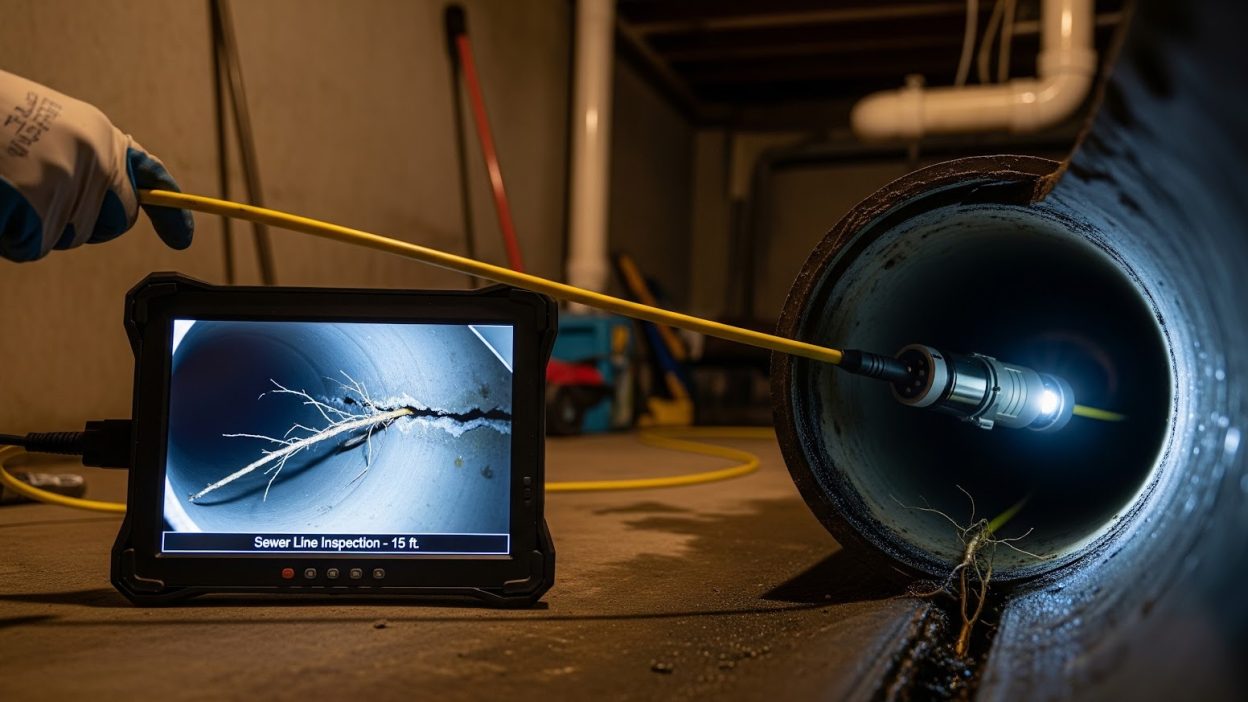
A plumber inserts a flexible, waterproof camera head attached to a cable into a cleanout access point or through a toilet. As the camera travels through the line, it transmits live video to a monitor and records the footage for later review. Here is what the camera commonly uncovers.
Tree Root Intrusion
Tree roots are drawn to the moisture and nutrients inside sewer pipes. They enter through small cracks or loose joints and grow into dense root masses that trap waste and eventually block the line entirely. This is one of the most common findings in properties with mature trees, and it is almost impossible to detect without a camera.
Bellied Pipes
A bellied pipe is a section that has sagged downward due to soil movement or poor installation. Wastewater pools in the low section instead of flowing freely, creating recurring clogs and a breeding ground for buildup. Bellied pipes rarely cause immediate emergencies, but they do cause persistent problems and eventually require excavation and correction.
Clay Pipe Corrosion and Deterioration
Homes built in Columbus, Ohio and other Midwestern cities before the 1970s are commonly served by clay tile sewer lines. Clay pipe holds up reasonably well under normal conditions, but the joints between sections are sealed with cement or oakum rather than fused together, making them vulnerable to root intrusion and offset over time. A camera inspection often reveals cracked sections, separated joints, or complete collapse in clay systems that have seen 50 or more years of use.
Offset Joints
Ground movement, freezing and thawing cycles, and settling foundations can shift pipe sections out of alignment. An offset joint restricts flow, catches debris, and creates a weak point where the pipe wall is under stress. Left unaddressed, an offset joint typically worsens over time.
Buildup and Grease Accumulation
Heavy grease or mineral scale inside the pipe narrows the effective diameter of the line and sets the stage for chronic clogs. While hydro-jetting can sometimes resolve this without pipe replacement, a camera inspection is the only way to gauge how severe the buildup actually is.
How to Request a Sewer Scope During the Inspection Period
Most purchase agreements include an inspection period, typically seven to fourteen days after mutual acceptance, during which the buyer can hire third-party inspectors and request repairs or credits based on findings. Here is how to use that window effectively.
Step 1: Ask your real estate agent to include a sewer scope contingency. Some buyers agents routinely recommend this; others do not bring it up unless asked. Make sure it is part of your inspection plan from the start.
Step 2: Hire a licensed plumber who specializes in camera inspections. Not every plumber offers this service as a standalone inspection. Look for a provider who delivers a recorded video along with a written summary, because that documentation is essential if you need to negotiate with the seller.
Step 3: Understand what a clean report looks like. A clean scope shows smooth pipe walls, fully aligned joints, no visible root intrusion, and unobstructed flow from the house to the connection point at the city main. The pipe interior should look round and consistent throughout its length.
Step 4: Know when a report is concerning. Red flags include visible root masses, sections of pipe that appear collapsed or crushed, significant offset at joints, standing water indicating a belly, or cracked or crumbling pipe walls. Minor buildup or a small number of hairline cracks may be manageable with cleaning or spot repair; major structural failure typically means full replacement.
Step 5: Get contractor estimates before your inspection period expires. If the camera reveals serious problems, use the footage and written report to obtain repair estimates from at least two plumbers. You need real numbers before you can negotiate intelligently.
Cost Comparison: Sewer Scope vs. Sewer Line Replacement
The math here is straightforward. A sewer camera inspection in the Columbus, OH area typically costs between $150 and $350 for a residential property. Some plumbing companies include a basic scope as part of a larger inspection package; others charge a flat rate for the service alone.
Compare that to the cost of sewer line repair or replacement. Spot repairs for a small cracked section of pipe can run $500 to $2,000. Replacing a full sewer line from the house to the street typically costs $4,000 to $15,000 in a standard suburban setting. If the line runs under a concrete driveway, mature landscaping, or a finished patio, trenchless repair methods (pipe bursting or pipe lining) can range from $6,000 to $20,000 or more depending on access and footage.
A $250 inspection that reveals a $12,000 repair need does not mean you should walk away from the home. It means you have information you can act on.
Using the Inspection as a Negotiation Tool
When a sewer camera inspection turns up significant findings, buyers have several options within the inspection period.
Request a credit at closing. Rather than asking the seller to arrange repairs (which can slow the transaction and may not result in the quality of work you want), ask for a credit equal to the estimated repair cost. This gives you control over the contractor selection and timing after you own the home.
Ask the seller to complete repairs before closing. This approach works best when the finding is clear-cut, such as a root mass that needs hydro-jetting or a simple joint repair. Require documentation and a warranty from the plumber who performs the work.
Renegotiate the purchase price. If the repair estimate is substantial and the seller is unwilling to offer a credit, you may be able to use the findings to support a lower purchase price.
Walk away if the numbers do not work. If the repair estimates push the true cost of the home above its market value or beyond your budget, a clean inspection contingency allows you to exit the transaction and recover your earnest money.
This is why the camera footage and written report are so valuable. Anecdotal claims about “needing some work” will not move a motivated seller; a timestamped video showing a collapsed clay pipe 40 feet from the foundation, paired with two contractor estimates totaling $14,000, is a completely different conversation.
Final Thoughts: Is a Sewer Inspection Worth It?
Absolutely. For a cost that is a small fraction of a percent of the purchase price, a sewer camera inspection before buying a home gives you visibility into one of the most expensive and completely hidden systems in the property. It protects buyers from inheriting a problem that may not surface until the first heavy rain or the first cold winter, and it creates a legitimate basis for negotiation when problems do exist.
If you are buying a home in Columbus, OH, particularly one built before 1980, a sewer scope is not an optional luxury. It is a basic piece of due diligence. You can find a local sewer camera inspection provider to schedule service during your inspection period.
The $200 to $300 you spend on this inspection could easily save you tens of thousands of dollars and months of stress after closing. That is one of the clearest return-on-investment calculations available to any home buyer.
Frequently Asked Questions
1. Is a sewer camera inspection required when buying a home?
No, it is not legally required. Standard home inspections do not include the sewer line, and no law currently mandates a sewer scope as part of a residential real estate transaction. However, industry professionals and buyer advocates strongly recommend it, particularly for homes older than 20 to 30 years, because the cost of discovery after closing is dramatically higher than a pre-purchase inspection.
2. How long does a sewer camera inspection take?
Most residential sewer camera inspections take between 30 and 60 minutes from setup to completion, depending on the length of the line and the number of access points. The plumber will typically share the video recording with you immediately after the inspection and provide a written report within 24 hours.
3. Can I request a sewer inspection after my inspection period has already closed?
Yes, you can schedule a sewer scope at any point in the process or even after you have already purchased the home. However, you lose the leverage of the inspection contingency once that period expires. If a problem is discovered after closing, the cost of repair is yours to bear unless you can demonstrate that the seller had prior knowledge and failed to disclose it.
4. What is the difference between a sewer scope and a hydrostatic pressure test?
A sewer camera inspection is a visual examination of the inside of the pipe using a fiber-optic camera. It reveals structural problems, blockages, and root intrusion. A hydrostatic pressure test checks whether the drain system holds water under pressure, which can indicate leaks or cracks that may not be visible on camera. The two tests are complementary, and some buyers in older homes opt for both.
5. What should I do if the sewer camera inspection finds a serious problem?
First, do not panic. Having documentation of the problem before closing is exactly the outcome the inspection is designed to produce. Obtain written repair estimates from at least two licensed plumbers, review the footage with your real estate agent, and decide whether to request a credit, ask for repairs, renegotiate the purchase price, or exit the transaction under your inspection contingency. The National Association of Realtors recommends that buyers work closely with their agent and legal counsel when using inspection findings for negotiation.