If you live in an older neighborhood and have mature trees in your yard, there is a good chance your underground plumbing is already at risk. Tree roots in sewer lines in Cincinnati, OH are one of the most common and costly plumbing problems homeowners face, yet most people have no idea it is happening until a serious backup or collapse forces their hand. Understanding why roots invade pipes, how to spot the early warning signs, and what modern solutions exist can save you thousands of dollars and a great deal of frustration.
Professional sewer cleaning services can help homeowners deal with root intrusion before it turns into a full pipe replacement, but awareness is the first line of defense.
Why Tree Roots Target Sewer Lines
Tree roots do not randomly wander underground. They grow toward resources, and sewer lines offer three things that roots find irresistible: moisture, oxygen, and nutrients.
Pipe Joints and Cracks as Entry Points
Most sewer lines installed before the 1980s in the Cincinnati area were made from clay or cast iron. Clay pipe sections are typically joined together with rubber gaskets or cemented couplings. Over decades, ground movement, temperature fluctuations, and simple aging cause those joints to loosen or crack. Even a hairline fracture is enough.
When warm wastewater travels through a pipe on a cold day, condensation forms on the outside of the pipe. Roots detect this moisture through microscopic root hairs and begin growing toward the source. Once a root tip finds a crack or a loose joint, it slips inside and begins to thrive in the nutrient-rich wastewater environment.
The Biology of Root Intrusion
Tree species common in Ohio yards, including silver maples, willows, oaks, and elms, are particularly aggressive in their root systems. According to the U.S. Forest Service, tree roots can extend two to three times the diameter of the tree’s canopy when searching for water and nutrients. A large silver maple in your front yard may have roots reaching well past the street, directly intersecting with your lateral sewer line.
Once inside the pipe, roots do not stop growing. They branch and expand, catching toilet paper, grease, and debris until the pipe is partially or fully blocked. In advanced cases, the roots can actually crack the pipe from the inside out, requiring full pipe replacement.
Why Aging Clay Pipes Are Especially Vulnerable
Cincinnati and its surrounding communities contain significant stretches of housing stock built between the 1920s and 1970s. The sewer laterals connected to these homes are often original clay installations that have been in the ground for 50 to 100 years. Clay is porous, joints degrade over time, and the pipe walls can develop small cracks that are invisible from the surface but act as open invitations to root growth.
According to the Water Research Foundation, root intrusion is one of the leading causes of sanitary sewer overflows and pipe failures in municipalities with aging infrastructure. For homeowners, the lateral line running from the house to the city main is typically their financial responsibility, meaning repair costs fall on the property owner.
Warning Signs Homeowners Notice First
Root intrusion rarely announces itself with a catastrophic failure. It is usually a slow process, and the early signs are easy to dismiss as minor inconveniences. Knowing what to look for can help you act before damage becomes severe.
Recurring Drain Backups
If you find yourself snaking a slow drain every few months and the problem keeps returning, roots may be the underlying cause. A plunger or drain snake can clear a temporary blockage, but it does nothing to address the roots themselves. The debris simply rebuilds around the living root mass.
Gurgling Sounds from Toilets and Drains
A toilet that gurgles when you run the bathroom sink, or a floor drain that bubbles when the washing machine drains, is indicating a partial blockage somewhere in the shared drain line. Air is being pushed back through the system because water cannot pass freely. This is a reliable early warning sign of a significant obstruction, and roots are a common culprit.
Multiple Slow Drains Throughout the House
One slow drain can usually be traced to a localized clog. When multiple fixtures throughout the home drain slowly at the same time, the blockage is almost certainly in the main sewer lateral, not inside the house. This pattern deserves immediate professional attention.
Wet or Sunken Patches in the Yard
If you notice a section of your lawn that stays inexplicably wet, smells faintly of sewage, or has developed a soft or sunken area, it may indicate a cracked or collapsed pipe underground. Wastewater leaking into the soil creates lush, fast-growing grass in the affected area, sometimes called a “green stripe” along the path of the sewer line.
Foul Odors Inside the Home
Sewer gas, which contains hydrogen sulfide and methane, should never be detectable inside a properly functioning home. If you notice a persistent rotten egg smell coming from drains or near the basement floor drain, it may indicate that a root intrusion has created a crack or break allowing gases to escape.
Modern Removal and Prevention Methods
Homeowners today have access to far better solutions than the old approach of digging up the yard and replacing pipe sections. Modern plumbing technology makes root removal and prevention more effective, less invasive, and more affordable.
Video Camera Inspection
The most important first step in diagnosing a root problem is a professional video pipe inspection. A waterproof camera is threaded through the sewer line, giving a technician a real-time view of the pipe interior. This reveals the exact location and severity of root intrusion, the condition of the pipe walls, whether any collapse or offset joints exist, and the best approach for repair.
Trying to address a root problem without a camera inspection is guesswork. The camera removes the guesswork and prevents unnecessary excavation.
Hydro-Jetting
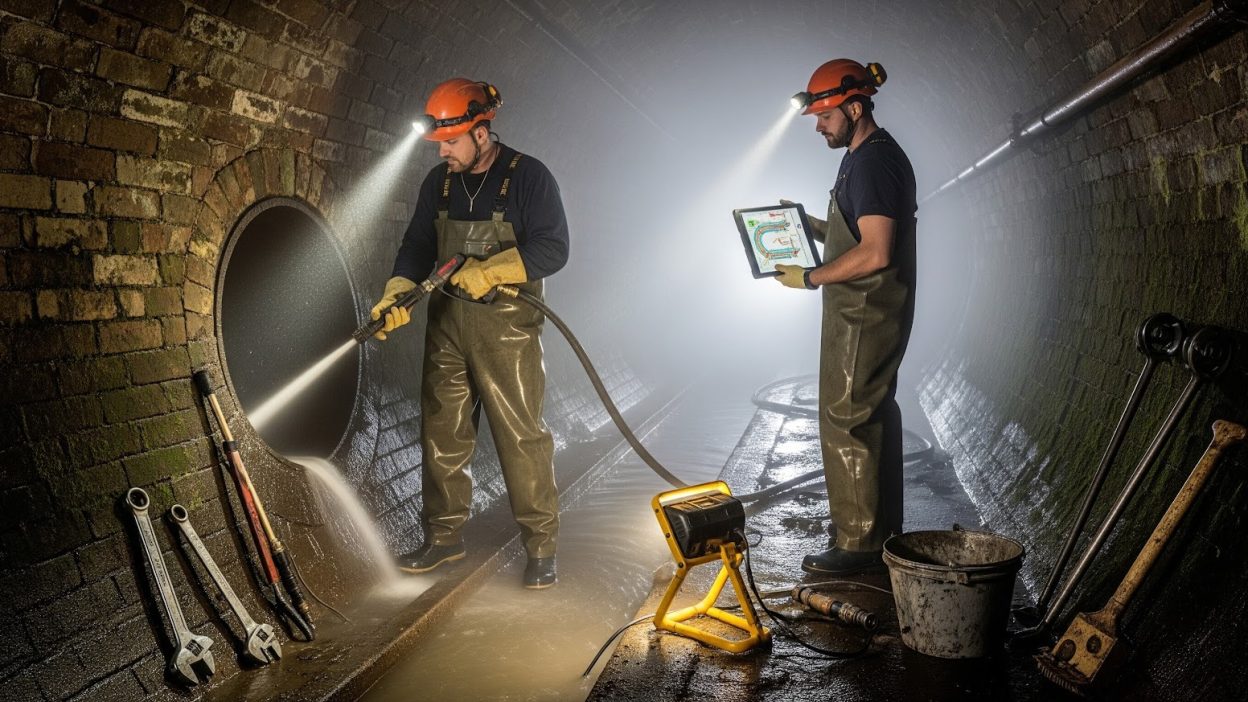
Hydro-jetting uses highly pressurized water, typically between 3,000 and 4,000 PSI, to scour the inside of the pipe. It is far more effective than mechanical snaking because it removes not just the root mass but also the grease, scale, and debris that accumulates around it. Hydro-jetting leaves the pipe walls clean and can restore near-full flow capacity.
The American Society of Civil Engineers recognizes hydro-jetting as one of the most effective non-destructive methods for sewer maintenance. It is important to note that hydro-jetting should be performed after a camera inspection confirms the pipe can withstand the pressure. Severely damaged or collapsed pipes may require repair before jetting is appropriate.
Trenchless Pipe Lining (CIPP)
If the video inspection reveals that root intrusion has damaged the pipe structurally, trenchless cured-in-place pipe lining (CIPP) is often the best solution. This process involves inserting a flexible liner saturated with resin into the existing damaged pipe. The liner is then inflated and cured, creating a smooth, seamless new pipe inside the old one.
CIPP is a significant advancement over traditional pipe replacement because it requires minimal excavation. In most cases, only one or two small access points need to be opened rather than digging up the entire sewer line. The new liner actually improves flow capacity because the smooth interior surface has less friction than aged clay, and it eliminates the joints where roots previously entered.
Trenchless pipe lining can extend the life of a sewer lateral by 50 years or more according to industry estimates from the National Association of Sewer Service Companies (NASSCO).
Root Treatments and Prevention
After clearing a pipe of roots, some plumbers apply a chemical root inhibitor such as copper sulfate or dichlobenil to the pipe interior. These products discourage regrowth along the pipe walls without harming the tree at the surface. They are most effective as a maintenance measure following cleaning, not as a standalone solution for an active infestation.
Homeowners should also be mindful of tree placement when adding landscaping. Keeping fast-growing or moisture-hungry trees well away from sewer line paths reduces long-term risk. Before planting any tree, it is worth locating your sewer lateral on a property survey or by calling 811, the national call-before-you-dig service.
The Cost of Waiting
Homeowners who address root intrusion at the early gurgling and slow-drain stage typically spend a few hundred to a few thousand dollars on hydro-jetting and inspection. Those who wait until a full backup or pipe collapse occurs can face repair bills ranging from $5,000 to $15,000 or more depending on the extent of damage, depth of the pipe, and whether excavation is required.
The math strongly favors early intervention. A video inspection costs a modest amount and provides a complete picture of what is happening underground. That information is invaluable for making an informed decision about maintenance versus repair.
For homeowners in the greater Cincinnati area dealing with aging clay sewer lines and mature trees, scheduling a periodic inspection every three to five years is a reasonable maintenance practice, particularly if the home was built before 1980.
Wrapping Up: What You Should Take Away
Tree roots in sewer lines are not a fringe problem. They are a predictable consequence of aging pipes and mature landscaping in neighborhoods throughout the Cincinnati metro area. The good news is that the problem is manageable when caught early, and modern technology has made removal and repair far less disruptive than it once was.
The key steps for any homeowner to remember are: watch for recurring backups, gurgling drains, and wet spots in the yard; schedule a video camera inspection if you suspect a problem; trust hydro-jetting to remove the root mass; and consider trenchless pipe lining if the pipe itself has sustained structural damage. Taking these steps protects both your home and your wallet.
You can also find local sewer service professionals on Google Maps to get guidance from experts familiar with the specific pipe conditions and soil types in the Cincinnati region.
Frequently Asked Questions
Q1: How do I know if tree roots are in my sewer line versus a regular clog?
Regular clogs are usually isolated to one drain and clear with snaking or a plunger. Root intrusion tends to cause slow draining across multiple fixtures, recurring backups that return within weeks of clearing, and gurgling sounds from toilets and floor drains. A video camera inspection is the only definitive way to confirm root presence in the pipe.
Q2: Can I use store-bought root killer products myself?
Consumer root-killing products containing copper sulfate are available at hardware stores and can slow root regrowth inside pipes. However, they are not effective at removing an established root mass and do not address any structural damage to the pipe. They work best as a preventive measure after a professional cleaning.
Q3: Will hydro-jetting damage my old clay pipes?
A licensed plumber will perform a camera inspection before recommending hydro-jetting. If the pipe is in poor structural condition, a lower-pressure flush may be used instead. Properly performed hydro-jetting is safe for clay, cast iron, and PVC pipes and is one of the most effective cleaning methods available.
Q4: Does homeowners insurance cover root damage to sewer lines?
Most standard homeowners insurance policies do not cover sewer line damage caused by tree roots, as it is considered a gradual maintenance issue rather than a sudden event. Some insurers offer optional sewer line coverage as a rider. It is worth reviewing your policy and speaking with your insurer to understand your coverage.
Q5: How often should I have my sewer line inspected if I have large trees in my yard?
For homes built before 1980 with clay sewer laterals and mature trees nearby, a video inspection every three to five years is a reasonable maintenance schedule. If you have experienced root-related backups in the past, annual inspections may be advisable until the situation is resolved and ongoing monitoring confirms the pipe is clear.
Q6: Is trenchless pipe lining suitable for all sewer pipes?
Trenchless CIPP lining works well in most residential pipe scenarios, but it is not suitable for pipes that have fully collapsed or where the pipe has significant offset joints that prevent the liner from being installed. A camera inspection will determine whether the pipe is a good candidate for trenchless repair or requires traditional excavation and replacement.