
Starting a renovation project is exciting, but before any new materials go in, the old ones often have to come out. That process is where light demolition services in Cincinnati, OH become essential. Whether you are preparing a kitchen for a full remodel, clearing out a damaged outbuilding, or removing outdated fixtures from a commercial property, light demolition is the step that makes everything else possible. Homeowners and property managers frequently underestimate how involved this stage can be, and skipping professional help often leads to safety risks, unexpected damage, and time-consuming cleanup. This guide breaks down the real situations that call for light demolition, what the process actually covers, and why working with trained professionals protects both your property and your timeline.
What Is Light Demolition?
Light demolition refers to the selective removal of non-structural or semi-structural elements within or around a property. Unlike full demolition, which levels an entire building, light demolition targets specific components such as interior walls, flooring, cabinets, sheds, decking, or damaged additions. The goal is precise removal with minimal disruption to the surrounding structure.
According to the National Association of Home Builders, selective or partial demolition is one of the most common first phases of residential renovation. It requires knowledge of load-bearing structures, utility locations, and safe disposal practices, all of which are reasons why professional involvement matters.
Common Situations Where Light Demolition Is Required Before Renovation
Kitchen and Bathroom Remodels
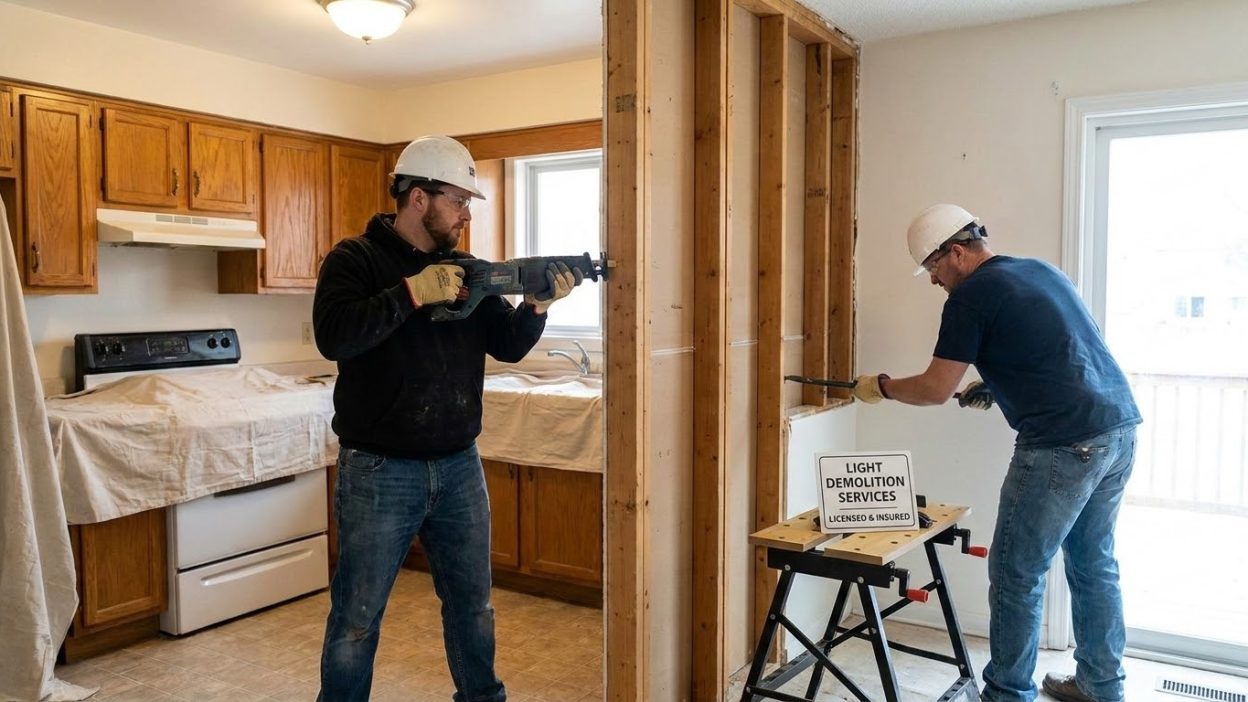
Kitchens and bathrooms are the most frequently renovated rooms in residential properties, and both almost always require light demolition before new work can begin. Old cabinetry must be detached and removed. Tile flooring or wall tile may need to be stripped. In some cases, a non-load-bearing wall separating a kitchen from a dining area is taken down to create an open floor plan.
Attempting this work without professional assessment can result in accidentally cutting into plumbing lines or electrical wiring hidden behind walls or under floors. A crew experienced in light demolition knows how to identify these risks before breaking anything open.
Room Additions and Layout Changes
Homeowners who want to reconfigure interior spaces, such as combining two small bedrooms into one larger room or opening up a living area, need walls removed. Even when a wall is confirmed to be non-load-bearing, the work involves disconnecting electrical outlets, rerouting switches, and patching surrounding drywall or flooring once the wall is gone.
The U.S. Department of Housing and Urban Development emphasizes that even minor structural changes should be assessed by qualified professionals to prevent unintended damage to a home’s integrity.
Basement Finishing or Conversion
Unfinished basements often contain old utility shelving, deteriorating drop ceilings, damaged concrete block partitions, or outdated HVAC equipment that must be cleared before the space can be converted into livable square footage. Light demolition in basements is particularly technical because moisture, mold, and load-bearing columns are all factors that require careful navigation.
Exterior Structures and Outdoor Spaces
Aging sheds, rotting decks, old fencing, crumbling retaining walls, and detached garages past their useful life are all candidates for light demolition. These structures may become safety hazards when left standing, especially after storm damage or years of neglect. Removing them opens up yard space and eliminates liability concerns for property owners.
Commercial Property Renovations
Business owners preparing office spaces, retail locations, or restaurant interiors for a new tenant or brand refresh often need existing build-outs removed. This can include dropped ceilings, partition walls, outdated flooring, built-in fixtures, and more. Commercial light demolition must be coordinated carefully to avoid damaging HVAC, sprinkler systems, or electrical infrastructure.
What Can Be Removed With Light Demolition Services?
Light demolition covers a wide range of materials and structures. Below is a breakdown of the most common removal categories:
Interior Elements
- Non-load-bearing walls and partitions
- Kitchen and bathroom cabinets, countertops, and vanities
- Tile, hardwood, laminate, and carpet flooring
- Drop ceilings and acoustic tile systems
- Built-in shelving and closet systems
- Old fixtures including tubs, sinks, and toilets
Exterior Structures
- Wooden or metal sheds and outbuildings
- Decks, patios, and pergolas
- Fencing and retaining walls
- Driveways or concrete pads (surface-level removal)
- Pool demolition or removal in some cases
Specialty Removals
- Damaged drywall sections following water or fire damage
- Insulation removal when replacing due to moisture or age
- Old flooring underlayment and subfloor sections
- Garage interiors before full conversion projects
Each of these removals involves more than simply tearing things apart. Proper disconnection from utilities, safe handling of potentially hazardous materials, and responsible debris disposal are all part of the job.
Why Hiring Professionals Avoids Safety Risks and Cleanup Hassle
Hidden Hazards in Older Homes
Homes built before 1980 may contain asbestos in floor tiles, insulation, or ceiling materials. Lead paint is another concern in pre-1978 construction. Disturbing these materials without proper protective equipment and disposal methods can create serious health hazards for occupants and workers alike.
The Environmental Protection Agency provides guidance on asbestos identification and safe removal practices. Professional demolition crews are trained to recognize these materials and handle them according to federal and state regulations.
Avoiding Structural Damage
A common DIY mistake is removing a wall assumed to be non-structural, only to discover it was carrying load from above. This can lead to sagging ceilings, cracked drywall in adjacent rooms, or in severe cases, partial collapse. Professionals assess structural elements before removal begins and use temporary supports when needed to protect the rest of the building.
Utility Safety
Electrical wires, gas lines, and plumbing supply or drain lines often run through walls and floors targeted for removal. Professional crews work with or around licensed electricians and plumbers to ensure utilities are properly shut off and capped before demolition begins. This prevents electrical fires, gas leaks, and water damage from occurring mid-project.
Debris Removal and Site Cleanup
One of the most overlooked parts of demolition is what happens after the material comes down. A kitchen demo alone can generate hundreds of pounds of drywall, tile, cabinetry, and insulation debris. Professional services handle hauling and disposal, often sorting materials for recycling where possible. This saves property owners from renting dumpsters, making multiple landfill runs, or leaving debris piled in driveways for days.
Faster Project Timelines
Renovation contractors typically cannot begin their work until demolition is fully complete and the site is clean. When homeowners attempt demolition themselves and run into problems, it creates scheduling delays that push back the entire project. A professional crew completes the work efficiently and to a standard that allows the next contractor to move in without delays.
How the Light Demolition Process Works
Most professional light demolition projects follow a consistent sequence:
- Site Assessment A walkthrough is completed to identify what needs to be removed, confirm utility locations, and flag any hazardous materials.
- Utility Disconnection Relevant utilities are shut off or capped in coordination with appropriate trades.
- Protective Measures Surrounding areas, flooring, and surfaces not targeted for removal are protected with drop cloths or barriers.
- Selective Removal Materials are carefully detached and removed in an order that protects the surrounding structure.
- Debris Hauling All removed materials are loaded and hauled away for disposal or recycling.
- Site Cleanup The space is swept and left in a condition ready for the next phase of renovation.
For property owners in the greater Cincinnati area, you can find a local light demolition team on Google Maps to help assess your specific project needs.
Wrapping Up: The Value of Getting Demolition Right
Light demolition is not a glamorous part of home improvement, but it is one of the most important. Done correctly, it sets up every phase that follows for success. Done poorly, it creates structural problems, safety hazards, and cleanup headaches that can cost far more to fix than the original demolition would have cost to do right.
Whether you are refreshing a kitchen, converting a basement, tearing down an aging shed, or reconfiguring a commercial space, investing in professional light demolition services is a decision that pays off in safety, speed, and peace of mind. Understanding what the process involves and what problems it solves helps property owners make informed decisions before the first tool is ever picked up.
Frequently Asked Questions
1. What is the difference between light demolition and full demolition?
Full demolition involves leveling an entire structure, such as a whole building or home. Light demolition is selective and targets specific elements like walls, cabinets, flooring, or outbuildings without affecting the main structure. Light demolition is used in renovation and remodeling preparation rather than complete teardown projects.
2. Do I need a permit for light demolition work?
Permit requirements vary by location and the scope of the work. Removing non-structural interior elements like cabinets or flooring typically does not require a permit. However, removing walls, even non-load-bearing ones, or demolishing exterior structures like sheds or decks may require local building permits. A professional demolition service can advise you on what permits are needed for your specific project.
3. How long does a light demolition project take?
The timeline depends on the scope of work. A single room demo, such as stripping a bathroom down to the studs, might take one to two days. Larger projects involving multiple rooms or exterior structures could take several days. A professional crew will provide a timeline estimate during the initial site assessment.
4. Can I live in my home during light demolition?
In most cases, yes. Because light demolition is selective, it is often possible to continue living in unaffected areas of the home during the project. However, dust, noise, and debris will be present. For projects involving hazardous materials like asbestos or significant portions of the home, temporary relocation during the work may be advisable.
5. How is demolition debris disposed of?
Professional light demolition crews handle debris hauling and disposal as part of the service. Materials are transported to appropriate disposal facilities. Many crews also sort materials for recycling, diverting wood, metal, and concrete from landfills where possible. This is one of the key advantages of hiring professionals over attempting a DIY demolition, where debris management becomes the homeowner’s responsibility.