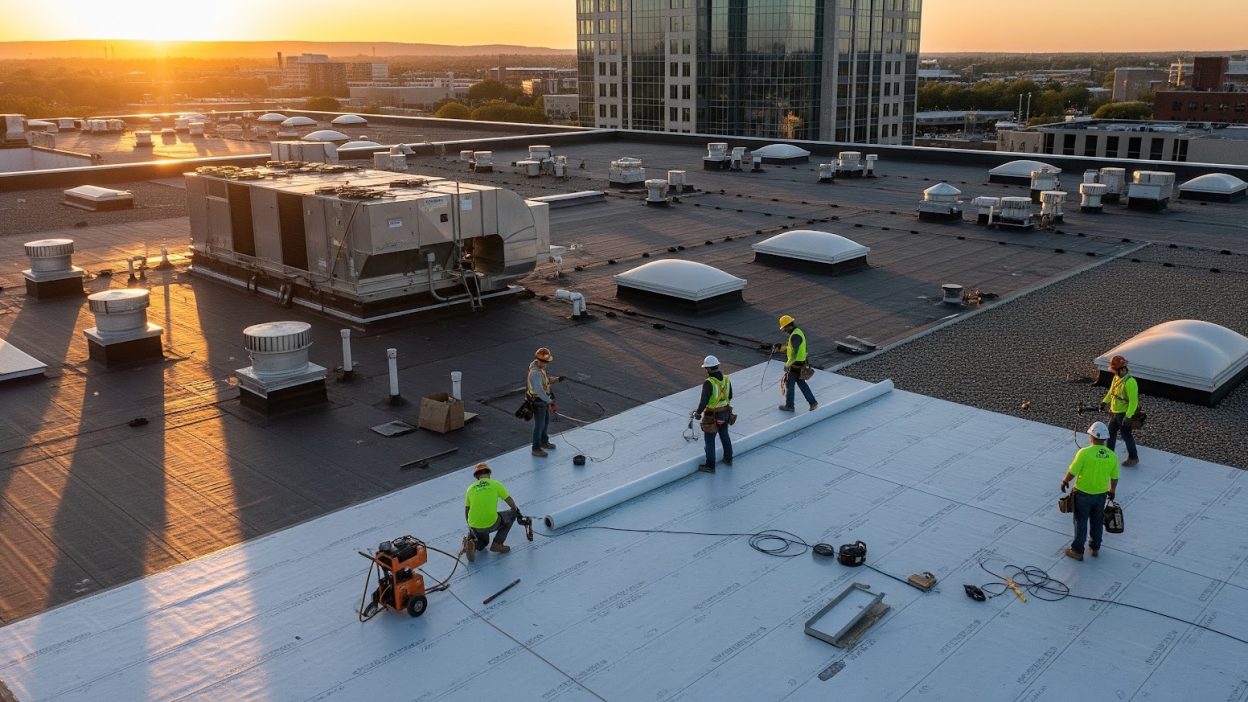
Choosing the wrong flat roof membrane is one of the most expensive mistakes a commercial building owner can make. Premature failure, chronic leaks, and costly full tear-offs are the real-world consequences of mismatching a roofing system to a building’s climate, use, and budget. If you are evaluating TPO vs. EPDM roofing in Cincinnati, OH, this guide will walk you through everything you need to know before signing a contract. Whether you manage a warehouse, retail center, or office complex, understanding the strengths and limitations of each membrane is essential to making a sound long-term investment. Working with a qualified provider of commercial roofing services ensures proper installation and warranty coverage for whichever system you choose.
What Are TPO and EPDM Roofing Membranes?
Before comparing the two systems head to head, it helps to understand what each material actually is.
TPO (Thermoplastic Polyolefin) is a single-ply roofing membrane made from a blend of polypropylene and ethylene-propylene rubber. It is heat-welded at the seams, which creates a continuous, watertight bond across the entire roof surface. TPO is typically white or light gray and is well known for its reflective properties.
EPDM (Ethylene Propylene Diene Monomer) is a synthetic rubber membrane that has been used on commercial flat roofs since the 1960s. It is most commonly installed in black, though white versions are available. EPDM seams are bonded using adhesive tape or liquid adhesives rather than heat welding, and the membrane can be installed fully adhered, mechanically attached, or ballasted.
Both systems are widely used, both are proven, and both have genuine advantages depending on the application.
Head-to-Head Comparison: TPO vs. EPDM
Lifespan
A properly installed TPO roof typically lasts 20 to 30 years, though real-world performance varies based on seam quality, foot traffic, and UV exposure. Because TPO is a relatively newer material compared to EPDM, long-term data beyond 30 years is still limited for some formulations.
EPDM has a longer track record. Well-installed EPDM roofs routinely last 25 to 35 years, with some documented installations exceeding 40 years. The rubber compound used in EPDM is highly resistant to ozone degradation and weathering, which contributes to its durability over time.
Verdict: EPDM has a slight edge in documented long-term lifespan, though TPO can match it when installed with quality seams and proper detailing.
Energy Efficiency and Reflectivity
This is where TPO has a clear advantage. Standard white TPO membranes reflect 70 to 80 percent of solar radiation, earning most products Energy Star certification and meeting Cool Roof Rating Council standards. This reflectivity can meaningfully reduce cooling loads in summer, which matters in a city like Cincinnati where July temperatures regularly push into the upper 80s and low 90s.
Black EPDM, by contrast, absorbs heat rather than reflecting it. While white EPDM is available, it is less common and tends to cost more. For buildings where air conditioning costs are a major concern, black EPDM can increase cooling expenses noticeably during warm months.
Verdict: TPO is the stronger choice for energy efficiency, particularly in sun-exposed applications.
Puncture Resistance
TPO membranes are generally thicker and more resistant to punctures and tears than standard EPDM. Commercial membrane thicknesses range from 45 to 80 mils for both materials, but TPO’s thermoplastic composition tends to hold up better under foot traffic, HVAC equipment work, and falling debris.
EPDM, being a rubber material, can be more susceptible to punctures from sharp objects, though it does have good flexibility and handles thermal movement well. Heavy ballasted EPDM installations add some protection, but that approach also adds structural load to the building.
Verdict: TPO offers better puncture resistance for roofs with regular foot traffic or mechanical equipment access.
Installed Cost Per Square Foot
Roofing costs vary significantly by region, installation method, and membrane thickness, but general market ranges provide useful benchmarks.
EPDM is typically the more affordable option, with fully installed costs ranging from $4.00 to $8.00 per square foot for standard commercial projects. Its longer history means more contractors are experienced with it, and material costs are well established.
TPO installation generally runs $5.50 to $9.50 per square foot, with heat-welding equipment and labor adding to the cost. That said, TPO’s energy savings potential can offset some of the higher upfront cost over time, particularly in buildings with high cooling loads.
Verdict: EPDM is typically less expensive upfront, while TPO may offer better total cost of ownership depending on energy usage.
How Each Membrane Performs in Cincinnati’s Climate
Cincinnati’s weather creates specific demands for commercial roofing. Summers bring UV-heavy sun exposure, high humidity, and temperatures that push flat roofs to absorb significant heat. Winters bring freeze-thaw cycles, occasional ice damming at roof edges, and the persistent problem of ponding water.
Summer UV Exposure
TPO’s reflective surface handles Cincinnati’s summer UV exposure well. By reflecting solar radiation, it reduces membrane surface temperatures and slows the oxidation process that degrades roofing materials over time. The National Roofing Contractors Association notes that reflective roofing can reduce rooftop surface temperatures by up to 50 to 60 degrees Fahrenheit compared to dark membranes, which translates to less thermal stress on seams and flashings.
Black EPDM absorbs that heat, which creates greater thermal expansion and contraction cycles. Over time, this can stress adhesive seams and flashings if the system is not detailed correctly.
Winter Ponding Water
EPDM has an advantage in cold-weather flexibility. Because it is a rubber membrane, it remains pliable at low temperatures and handles the expansion and contraction caused by freeze-thaw cycles without cracking. It also has good resistance to standing water, which is critical on flat commercial roofs where drainage is imperfect.
TPO membranes, depending on formulation, can become more brittle in very cold temperatures. Seam integrity is particularly important to maintain in freeze-thaw conditions. Poor TPO seams can open slightly under repeated thermal cycling, creating entry points for water.
For Cincinnati specifically, buildings with known drainage issues or flat roof sections that routinely hold water should prioritize membrane flexibility and seam strength when making a selection.
Maintenance Requirements
Both membranes require routine maintenance to reach their expected service lives, but their maintenance profiles differ.
TPO maintenance focuses heavily on seam inspection. Heat-welded seams should be inspected annually to confirm they remain fully bonded. Flashings around penetrations, drains, and curbs are common failure points and should be checked after major weather events. TPO’s white surface also shows debris and biological growth more readily, so periodic cleaning is recommended to maintain reflectivity.
EPDM maintenance centers on monitoring adhesive seam integrity and addressing any shrinkage that can pull the membrane away from flashings and termination bars. EPDM has a known tendency to shrink slightly over time, which is the most common cause of flashing failures on older systems. Regular inspections by a qualified roofer can catch early shrinkage before it causes leaks.
According to Building Enclosure research, both membranes benefit significantly from proactive inspection programs that include drain clearing, debris removal, and detailed review of all penetrations and perimeter edges at least twice per year.
Warranty Differences Building Owners Should Negotiate
Manufacturer warranties for both TPO and EPDM typically range from 10 to 30 years depending on membrane thickness and installation requirements. However, reading the fine print is essential.
Key warranty terms to review and negotiate include:
No-dollar-limit (NDL) coverage means the manufacturer covers both labor and materials in a warranty claim, not just materials. NDL warranties are worth the additional cost for large commercial roofs.
Seam coverage should be explicitly included. Some EPDM warranties exclude adhesive seam failures, which is one of the most common failure modes on older systems. For TPO, confirm that heat-welded seam failures are fully covered.
Maintenance requirements embedded in the warranty language can void coverage if not followed. Most manufacturers require documented annual inspections and prompt repair of any damage to maintain warranty validity.
Transferability matters if the property may be sold. A transferable roof warranty is a meaningful selling point and can simplify due diligence for buyers.
Building owners should also ask whether the contractor carries a workmanship warranty separate from the manufacturer’s product warranty, as installation errors are a leading cause of premature membrane failure.
Making the Right Choice for Your Building
There is no universal answer to the TPO vs. EPDM question. The right membrane depends on your building’s specific characteristics and priorities.
Choose TPO if your building has high air conditioning costs and cooling efficiency is a priority, if the roof has regular foot traffic from HVAC maintenance crews, or if you are looking for a modern single-ply system with strong seam integrity from a qualified installer.
Choose EPDM if budget is the primary constraint, if the roof has drainage challenges that result in chronic ponding water, if the building is in an area with minimal cooling loads, or if you want a membrane with a 50-plus year track record in commercial applications.
For buildings in Cincinnati with mixed-use roofs that combine mechanical equipment access with drainage challenges, a hybrid approach, such as using TPO over the primary field with reinforced EPDM at high-traffic access areas, is sometimes worth discussing with a roofing professional.
Final Thoughts on Selecting a Flat Roof Membrane
Both TPO and EPDM are legitimate, proven roofing solutions for commercial flat roofs. The decision comes down to your building’s energy profile, climate exposure, maintenance capacity, and budget. For buildings in Cincinnati and the surrounding region, summer reflectivity and winter flexibility are the two performance factors that most directly affect long-term durability. Getting multiple bids from experienced contractors, verifying warranty terms in writing, and scheduling regular inspections regardless of which membrane you select will do more to extend roof life than any single material choice.
If you are ready to discuss your building’s specific situation, connecting with a local commercial roofing specialist in Cincinnati, OH can help you evaluate which system fits your structure, budget, and long-term maintenance goals.
Frequently Asked Questions
Q1: How long does a TPO roof last compared to an EPDM roof? A properly installed TPO roof typically lasts 20 to 30 years. EPDM has a slightly longer documented track record, with many installations lasting 25 to 35 years or more. Actual lifespan depends heavily on installation quality, maintenance frequency, and climate conditions.
Q2: Is TPO or EPDM better for energy savings? TPO is generally better for energy savings because its white reflective surface deflects solar heat rather than absorbing it. White TPO membranes commonly meet Energy Star standards and can reduce cooling costs meaningfully in warm climates. Black EPDM absorbs heat and is less energy efficient, though white EPDM is an option for buildings where reflectivity is a priority.
Q3: Which membrane handles ponding water better? EPDM is generally more tolerant of prolonged water exposure due to its rubber composition and flexibility. However, neither membrane is designed as a long-term solution for standing water, and chronic ponding should be addressed through proper drain installation or roof slope correction regardless of membrane type.
Q4: Can EPDM or TPO be installed over an existing roof? In some cases, yes. Both membranes can be installed in recover applications over existing roofing if the substrate is structurally sound and moisture levels in the existing system are within acceptable limits. A qualified roofing contractor can assess whether a recover is appropriate or whether a full tear-off is required.
Q5: What is the average cost difference between TPO and EPDM installation? EPDM tends to be less expensive, with typical installed costs ranging from $4.00 to $8.00 per square foot. TPO generally runs $5.50 to $9.50 per square foot due to heat-welding equipment and specialized labor requirements. Actual costs vary based on project size, roof complexity, membrane thickness, and regional labor rates.
Q6: How often should a commercial flat roof be inspected? Most roofing professionals and manufacturers recommend formal inspections at least twice per year, typically in spring after winter freeze-thaw cycles and in fall before cold weather sets in. Additional inspections after major storms or hail events are also advisable to identify and repair damage before it progresses.