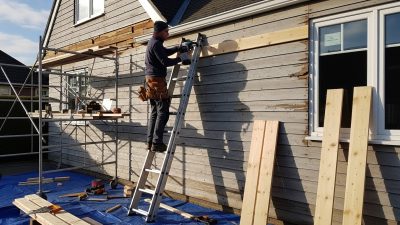
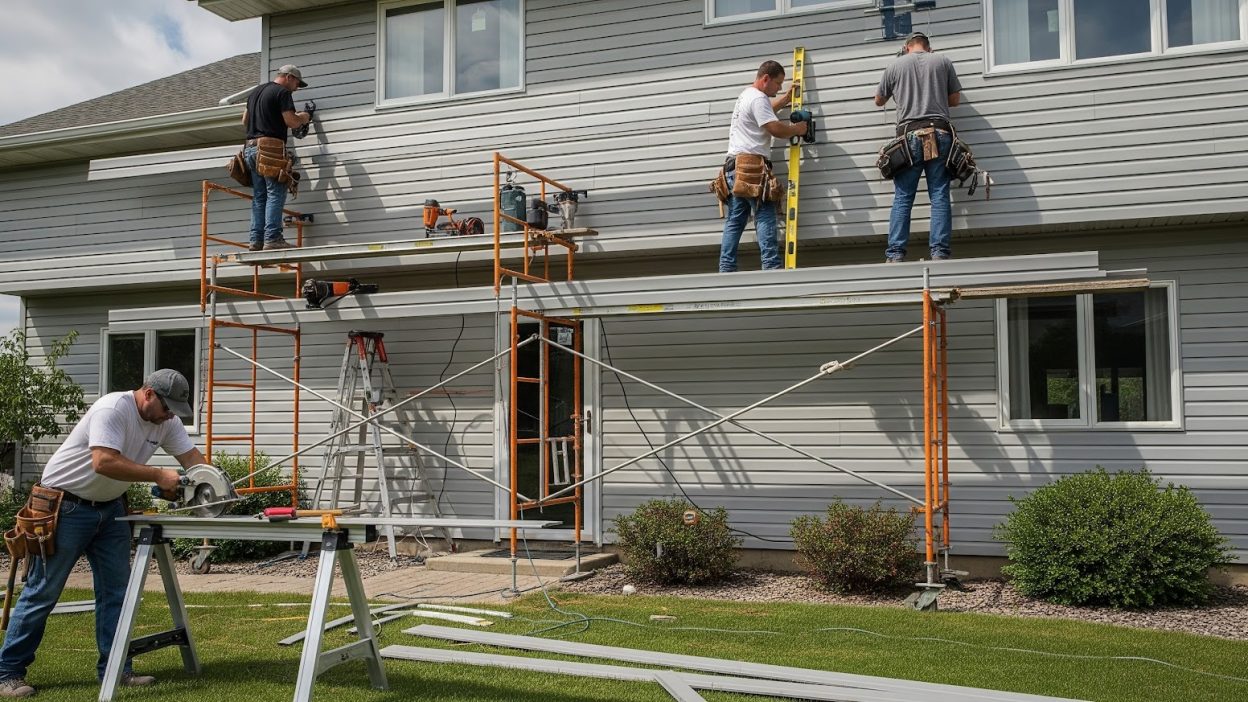
Homeowners across the country are always looking for ways to cut renovation costs, and one question that comes up frequently is whether it is possible to skip the tear-off and simply layer new material over what is already there. Installing siding over existing siding in Cincinnati, OH is a topic that deserves a thorough, honest look because what seems like a money-saving shortcut can sometimes turn into a much more expensive problem down the road. If you are considering a siding installation project, understanding the risks and requirements before making a decision is essential.
This guide breaks down when overlaying is a legitimate option, when full removal is non-negotiable, and why Cincinnati’s specific climate makes moisture management a critical factor in every re-siding decision.
What Does “Installing Siding Over Existing Siding” Actually Mean?
Installing siding over existing siding means applying a new layer of exterior cladding directly on top of the old material without removing it first. This approach is sometimes called an “overlay” or “re-side over” method. The most common scenario involves installing vinyl siding over older wood lap siding or deteriorating aluminum panels.
On the surface, the appeal is clear: no tear-off labor costs, less debris hauling, and a faster job overall. In some cases, that logic holds up. In many others, it does not.
When Overlaying New Siding Is Acceptable
There are specific conditions under which an overlay installation can be done responsibly. These conditions typically include:
The existing siding is structurally sound. If the current siding is flat, firmly attached, and free of rot, mold, or warping, it can potentially serve as a stable substrate for new material. Wood lap siding in good condition is often cited as an acceptable base for vinyl siding.
There is no existing moisture damage. Before any overlay is considered, a professional should inspect the wall assembly for signs of trapped water, discoloration, or soft spots in the sheathing beneath the siding. If the current siding has been keeping water out effectively, the odds of underlying damage are lower.
Local building codes permit it. Many jurisdictions allow one layer of siding over another but prohibit three or more layers. Always check with your local building department before proceeding. In Hamilton County and the greater Cincinnati area, permit requirements and inspection standards should be confirmed ahead of any siding work.
The added thickness is accounted for. Layering new siding adds depth around windows, doors, and trim. If those details are not properly extended and flashed, water infiltration becomes a near certainty. A skilled installer will account for these transitions.
According to the Vinyl Siding Institute, proper installation over existing siding requires that the old surface be smooth, even, and capable of holding fasteners without compromise.
When Full Removal Is Required
There are situations where tearing off the old siding is not optional. Cutting corners in these scenarios can lead to structural damage that costs far more to repair than the original tear-off would have.
Rot or mold is present. If any portion of the existing siding or the sheathing beneath it shows signs of rot, mold, or fungal growth, removal is mandatory. Covering rot does not stop it. It traps moisture and accelerates decay, often spreading to wall studs and insulation before any visible sign appears on the new exterior.
The siding is severely warped or uneven. New siding installed over a wavy or buckled surface will not sit flat. This creates gaps where water can enter, and the finished appearance will be noticeably poor.
Asbestos-containing materials are present. Older homes, particularly those built before the 1980s, may have siding that contains asbestos. In these cases, removal must follow strict EPA guidelines and be handled by licensed abatement professionals. Covering asbestos siding without proper assessment is both a health hazard and a legal liability.
Multiple layers already exist. Adding a third layer of siding is generally prohibited by building codes and creates excessive weight load on the wall framing. It also makes future inspections and repairs significantly more difficult.
There are structural concerns. If the wall framing itself shows signs of damage, an overlay masks the problem and makes it nearly impossible to repair without eventually removing all siding layers.
How Overlaying Affects Home Inspections, Resale, and Warranties
This is an area many homeowners do not think about until they are preparing to sell their home, and it can create real complications.
Home inspections. A qualified home inspector will note the presence of multiple siding layers and flag it as a potential concern. They cannot inspect what is hidden beneath, which means they will often recommend further evaluation or disclose it as an unknown risk factor. This can slow a sale or lead to price negotiations.
Resale disclosures. In Ohio, sellers are required to disclose known material defects. If an overlay was done improperly, or if there is suspected moisture damage beneath the layers, that becomes a disclosure issue. Buyers and their attorneys take these matters seriously.
Manufacturer warranties. Most siding manufacturers have specific installation requirements written into their warranty terms. Installing over existing siding without following those guidelines can void the warranty entirely. That means if the new siding fails prematurely, the homeowner has no recourse with the manufacturer. Always read the warranty documentation before choosing an overlay approach.
The National Association of Realtors has noted that exterior condition is one of the top factors affecting buyer perception and offer price, making it important to think long-term about any siding decision.
Cincinnati-Specific Moisture Concerns: Why Ohio’s Climate Changes the Equation
Cincinnati sits in a climate zone that experiences hot, humid summers and cold, wet winters. That combination creates conditions where moisture management is not just a best practice but a critical necessity.
Ohio’s average summer relative humidity regularly climbs above 70 percent. During those months, vapor can work its way into wall assemblies through any gap in the building envelope. When siding is overlaid without a proper house wrap or drainage plane beneath the new material, that moisture has nowhere to go. It accumulates in the sheathing and framing, feeding mold and rot without any visible warning signs on the exterior.
The role of house wrap. House wrap, such as a product meeting ASTM standards for water-resistive barriers, acts as a secondary line of defense against bulk water intrusion while still allowing vapor to pass through. When new siding is installed over old siding without addressing the weather-resistant barrier layer, that protection is missing or compromised.
Drainage planes matter. Modern siding installation best practices call for a drainage plane, a small gap behind the siding that allows any water that gets past the outer layer to drain downward and escape rather than sitting against the sheathing. This detail is nearly impossible to incorporate properly in a simple overlay job.
Seasonal freeze-thaw cycles. Cincinnati winters bring repeated freeze-thaw events. Water trapped in wall cavities expands when it freezes, forcing apart the materials around it. Over multiple seasons, this accelerates deterioration in ways that become very expensive to address.
For homes in Cincinnati and surrounding communities in Hamilton, Clermont, and Warren counties, these regional factors make it especially important to consult with an experienced local contractor before deciding whether an overlay is appropriate for a specific property.
The Real Cost Comparison
Many homeowners pursue an overlay specifically to save on tear-off costs, which typically run between $1,000 and $3,000 for an average home depending on square footage and material. That savings can evaporate quickly if hidden moisture damage is discovered later, or if the overlay fails prematurely because of an improper installation.
A full tear-off also gives contractors the opportunity to inspect and repair sheathing, add modern house wrap, and address any air sealing deficiencies before the new siding goes on. Those improvements contribute to energy efficiency and longevity in ways that an overlay simply cannot match.
According to Remodeling Magazine’s Cost vs. Value Report, siding replacement consistently ranks among the top exterior remodeling projects for return on investment, particularly when the job is done with quality materials and proper installation.
Wrapping It All Up: Making the Right Call for Your Home
Installing siding over existing siding is not automatically a bad idea, but it is also not automatically a safe shortcut. The right answer depends on the condition of the current siding, the state of the materials beneath it, local building codes, and the specific climate conditions the home faces.
In a city like Cincinnati, where seasonal humidity and freeze-thaw cycles put real stress on exterior wall assemblies, the margin for error is smaller than in drier climates. A proper inspection, honest assessment of existing conditions, and a clear understanding of warranty and disclosure implications should guide every re-siding decision.
Homeowners who take the time to understand these factors before committing to an approach are far more likely to end up with a durable, high-performing exterior that adds genuine value to their property. For local guidance and professional assessment, you can also find trusted siding contractors serving the Cincinnati area to evaluate your specific situation in person.
Frequently Asked Questions
1. Is it legal to install new siding over old siding in Cincinnati, OH?
In most cases, local building codes allow one additional layer of siding over an existing layer, but not more than two total layers. However, permit requirements and specific restrictions vary by municipality within the greater Cincinnati area. Always check with your local building department or Hamilton County before beginning any siding project.
2. Will installing siding over old siding void my new siding warranty?
It can. Most siding manufacturers include specific installation requirements in their warranty terms. If new siding is installed over existing siding without following those guidelines, the warranty may be voided. Always review the manufacturer documentation and confirm with your installer before proceeding with an overlay approach.
3. How can I tell if there is moisture damage under my existing siding?
Warning signs include soft or spongy areas when you press on the siding, discoloration or dark staining, visible mold or mildew near the base of the wall, peeling interior paint near exterior walls, and musty odors inside the home. A professional contractor can perform a more thorough inspection and probe for hidden damage before any installation begins.
4. Does adding a second layer of siding affect my home’s energy efficiency?
It can have a minor insulating effect, but the impact is generally small unless the new material includes built-in insulated backing. More importantly, if house wrap and air sealing are not addressed during the project, overall energy performance may not improve meaningfully even with new siding in place.
5. What types of siding can be installed over existing siding?
Vinyl siding is the most common material installed over existing siding, particularly over old wood lap or aluminum siding. Fiber cement siding is generally heavier and typically requires a full tear-off for proper installation. Metal panels and engineered wood products also usually require removal of the old siding first. The suitability of any material depends on the condition and type of the existing siding.
6. How does Cincinnati’s humidity specifically affect siding performance?
Cincinnati’s climate includes hot, humid summers where relative humidity regularly exceeds 70 percent, combined with cold winters that bring freeze-thaw cycles. This combination creates conditions where moisture can become trapped in wall assemblies, leading to rot, mold, and structural damage if proper house wrap and drainage planes are not in place. These regional factors make moisture management especially important for any siding project in the area.