When Nashville homeowners start planning a new outdoor living space, one of the first and most important decisions is choosing the right decking material. The debate around composite vs wood deck pros and cons in Nashville, TN is not just about aesthetics or budget. It is about choosing a material that can hold up against the city’s punishing summer heat, high humidity, and frequent rain cycles without breaking down within a few years.
If you are looking for professional guidance from experienced Nashville deck builders, understanding the core differences between composite and wood decking will help you make a smarter decision before you ever request a quote. This guide walks through the key factors that matter most for homeowners in Middle Tennessee.
Understanding Nashville’s Climate and Why It Matters for Decking
Nashville sits in a humid subtropical climate zone, which means hot, sticky summers with average high temperatures hovering around 90 degrees Fahrenheit from June through August. The city also receives approximately 47 inches of rainfall per year, spread fairly evenly across all seasons.
This combination of heat, humidity, and moisture is particularly hard on outdoor building materials. Wood expands and contracts with temperature and moisture changes. Composite materials respond differently to these same forces. Understanding how each material behaves under these specific conditions is the foundation for making the right choice.
According to the U.S. Department of Energy, building materials and outdoor structures in warm, humid climates are exposed to significantly more stress than those in drier regions, which directly affects longevity and maintenance requirements.
Heat Retention: How Nashville Summers Affect Your Barefoot Experience
One of the most commonly overlooked factors in the composite vs. wood debate is surface temperature during peak summer heat. Nashville afternoons in July and August can be brutal, and the decking material you choose will determine whether your outdoor space is actually usable during those hours.
Composite decking tends to absorb and retain more heat than natural wood. Dark-colored composite boards exposed to direct afternoon sun can reach surface temperatures well above 150 degrees Fahrenheit, which makes barefoot walking uncomfortable and potentially unsafe for children and pets. Many composite manufacturers have responded to this problem by engineering lighter-colored boards with heat-dissipating cap layers, but the issue has not been entirely solved across all product lines.
Pressure-treated pine and hardwood decking naturally reflect slightly more heat than dark composite materials, though they also get hot in direct sun. Light-colored or naturally lighter wood species tend to stay cooler underfoot compared to darker composite options.
For Nashville homeowners who prioritize barefoot comfort during summer gatherings, the practical advice is to choose lighter-colored decking in either category and to consider shade structures like pergolas or shade sails if the deck faces west or south.
The National Wood Flooring Association notes that natural wood has inherently lower thermal conductivity compared to many synthetic materials, which contributes to its slightly cooler surface feel in outdoor applications.
Lifetime Cost Comparison: Upfront Price vs. Long-Term Expenses
The cost conversation around decking almost always starts with the upfront price per square foot, but that framing misses the larger financial picture. A true cost comparison needs to account for the full 15-year lifecycle of your deck, including annual and periodic maintenance expenses.
Wood Decking: Initial Savings, Ongoing Costs
Pressure-treated pine is the most affordable decking material available in Nashville, typically running between $15 and $25 per square foot installed. Cedar and redwood cost more, ranging from $25 to $40 per square foot installed, but they offer better natural resistance to rot and insects.
The catch is maintenance. Wood decks in Nashville’s climate require:
- Cleaning and brightening once per year
- Sealing or staining every one to three years depending on sun and moisture exposure
- Board replacement as individual planks warp, crack, or develop rot
When you factor in the cost of deck stain or sealant, supplies, and either professional labor or your own time, maintaining a wood deck in Nashville realistically costs between $300 and $800 per year for an average-sized deck. Over 15 years, that adds up to $4,500 to $12,000 in maintenance costs alone, on top of the original installation price. Some homeowners also face partial board replacement every five to seven years, which adds several hundred to several thousand dollars depending on the extent of the damage.
Composite Decking: Higher Upfront, Lower Maintenance
Composite decking typically runs between $35 and $60 per square foot installed, making it significantly more expensive at the outset. Premium capped composite products from brands like Trex, TimberTech, and Fiberon sit at the higher end of that range.
However, composite decking requires far less ongoing maintenance. Most products only need periodic cleaning with soap and water or a composite-specific cleaner once or twice per year. There is no need for staining, sealing, or painting. Quality composite boards also resist the warping, cracking, and rotting that plague wood decks in humid climates.
Over a 15-year period, a composite deck may require as little as $150 to $400 per year in maintenance costs, primarily cleaning supplies and occasional professional washing. Total 15-year maintenance cost: approximately $2,250 to $6,000.
The 15-Year Math
For a 300-square-foot deck, here is a simplified comparison:
A pressure-treated wood deck installed at $20 per square foot costs $6,000 upfront. Adding $7,500 in estimated 15-year maintenance costs brings the total to approximately $13,500.
A composite deck installed at $45 per square foot costs $13,500 upfront. Adding $4,000 in estimated 15-year maintenance costs brings the total to approximately $17,500.
The gap narrows significantly when higher-quality wood species are chosen, or when homeowners factor in the aesthetic and comfort advantages that composite products retain over the full 15-year period without fading, graying, or surface degradation that untreated wood experiences.
For homeowners planning to stay in their Nashville home long-term, composite often delivers better value. For those who may sell within five to seven years, wood’s lower upfront cost may make more financial sense.
The Best Hybrid Approach: Composite Boards on a Pressure-Treated Subframe
For budget-conscious Nashville homeowners who want the durability and low-maintenance benefits of composite decking without paying the premium for an all-composite build, there is a well-established middle ground used by experienced deck contractors throughout Middle Tennessee.
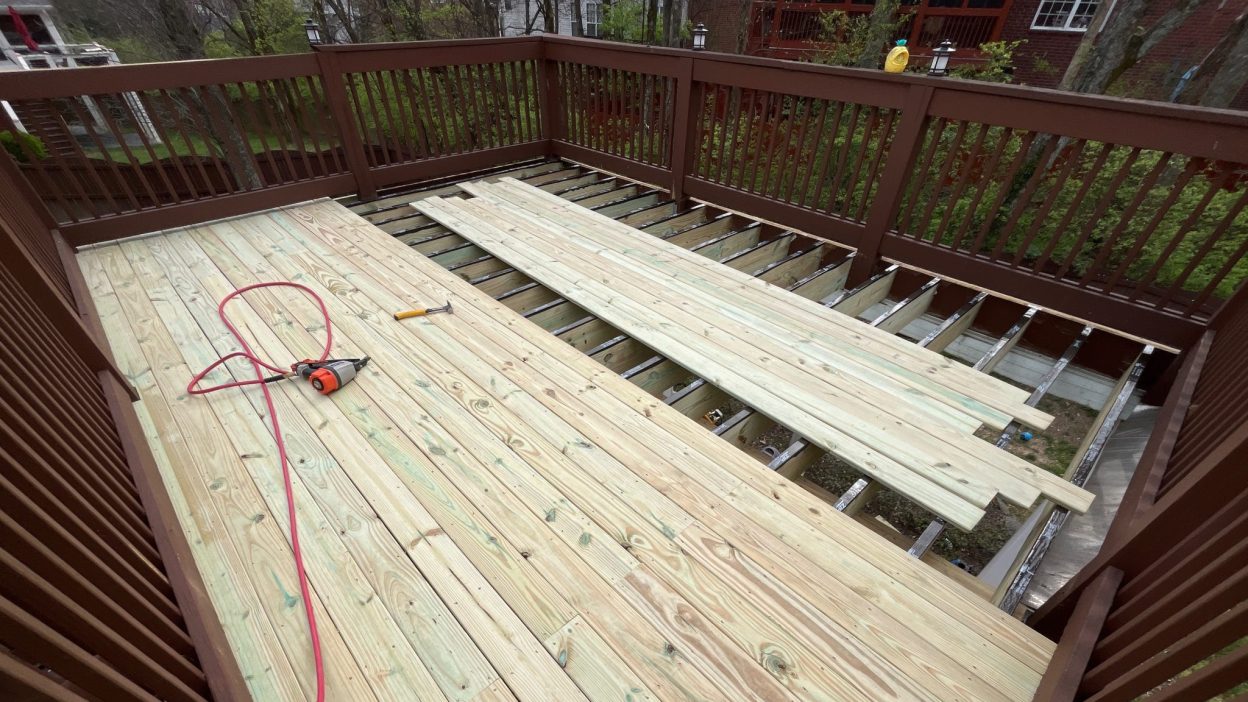
The hybrid approach combines composite decking boards on top with a pressure-treated pine subframe below. The framing, joists, posts, and beams are all built from pressure-treated lumber, which is highly cost-effective and structurally sound when properly installed and maintained. The visible decking surface consists of composite boards, which are what homeowners and guests see and walk on every day.
This approach delivers several practical advantages:
The subframe accounts for the majority of the structural lumber in any deck build. Pressure-treated pine is extremely affordable and performs well when it is protected from standing water and properly spaced for ventilation. The composite surface above handles the daily wear, UV exposure, foot traffic, and moisture that break down raw wood so quickly in Nashville’s climate.
From a cost perspective, this hybrid method can reduce the total installed price by 20 to 30 percent compared to all-composite construction while still delivering a deck surface that looks premium, resists fading, and requires minimal annual maintenance.
Most reputable deck builders in Nashville recommend this hybrid construction method as the standard approach for homeowners who want to balance quality with budget without cutting corners on longevity.
Which Material Is Right for Your Nashville Home?
There is no universally correct answer, but there are clearer answers depending on your specific situation.
Choose composite decking if you plan to stay in your home for more than ten years, want a low-maintenance surface, prioritize consistent appearance over time, or have young children and pets who use the deck frequently.
Choose pressure-treated wood if you have a tighter upfront budget, plan to sell within five to seven years, are comfortable with annual maintenance, or are building a secondary structure like a pool deck where aesthetics are less of a priority.
Choose the hybrid approach if you want composite-level surface performance with lower initial costs, are working with an experienced contractor who understands proper subframe construction, and want a durable deck that will hold up through multiple Nashville summers.
For additional guidance on material selection and deck construction in the Nashville area, you can also find local contractor information through Google Maps to connect with professionals who build decks in this specific climate every day.
Final Thoughts: Making the Smart Material Choice in Nashville
The Bottom Line on Composite vs. Wood Decking in Nashville
Nashville’s hot, humid climate tips the scales toward composite or hybrid construction for homeowners focused on longevity and reduced annual maintenance. The upfront price difference between wood and composite is real, but it narrows considerably when the full 15-year cost of maintaining a wood deck in this climate is factored in.
Natural wood remains a legitimate choice for the right homeowner and the right situation. Its warmth, affordability, and workability make it appealing, especially for larger or more complex deck designs where material costs are a major constraint.
The hybrid method of composite boards over a pressure-treated subframe remains the most practical and cost-effective solution for most Nashville homeowners who want a durable, attractive outdoor space without overpaying for all-composite construction.
Whatever direction you choose, working with a deck builder who has direct experience with Nashville’s climate conditions will help ensure the build is designed and installed in a way that maximizes the life of your investment.
Frequently Asked Questions
Q: Does composite decking get hotter than wood in Nashville summers?
A: Yes, darker composite boards can reach higher surface temperatures than natural wood in direct sunlight. However, lighter-colored composite products with heat-reducing cap layers have significantly improved in recent years. Choosing a lighter color and adding shade structures helps manage surface temperatures regardless of the material you select.
Q: How often does a wood deck need to be restained or resealed in Nashville?
A: In Nashville’s climate, most wood decks benefit from cleaning and a fresh coat of stain or sealant every one to two years. Decks in full sun or exposed to heavy rain may need attention annually, while partially shaded decks can sometimes go two to three years between treatments before showing visible wear.
Q: Is composite decking worth the extra cost?
A: For homeowners planning to stay in their home for 10 or more years, composite decking typically delivers better long-term value when total maintenance costs are factored in. The lower upfront cost of wood can be offset by staining, sealing, and board replacement expenses over time, especially in a demanding climate like Nashville’s.
Q: What is the best composite decking brand for hot and humid climates?
A: Brands like Trex, TimberTech, and Fiberon offer capped composite products specifically designed to resist moisture, UV fading, and staining. Capped composite products have a protective polymer shell over the core material that makes them significantly more resistant to humidity and heat-related deterioration than earlier composite products or uncapped boards.
Q: Can I build a composite deck myself to save money?
A: Composite decking installation is within reach for experienced DIYers, but most manufacturers require proper subframe spacing and fastener types to maintain their product warranties. Nashville’s climate also puts a premium on proper ventilation and drainage design. For most homeowners, professional installation is recommended to ensure the structure is built correctly and the material warranty remains valid.