Losing a diamond or gemstone from a ring is one of the most heartbreaking jewelry mishaps a person can experience — and it almost always comes down to one overlooked culprit: a loose or worn prong. Knowing how to tell if ring prongs are loose in your area, whether you are in a small town or a busy city, is a skill every jewelry owner should develop. Most people never inspect their prongs until a stone is already missing. The good news is that a few simple checks performed at home, combined with routine visits for professional jewelry repair service, can protect your most treasured pieces for decades to come.
This guide covers everything you need to know: how to inspect prongs yourself, which daily habits silently damage them, and when to call in a professional.
What Are Ring Prongs and Why Do They Fail?
Prongs are the small metal claws, typically four or six in number, that grip a gemstone and hold it securely in its setting. They are usually made from gold, white gold, or platinum. Over time, prongs bend, thin out, and wear down from everyday contact with hard surfaces, chemicals, and even fabric fibers. A prong does not have to break entirely to become dangerous. Even a slight tilt or thinning can create just enough gap for a stone to work its way loose.
According to the Gemological Institute of America (GIA), the prong setting is the most common ring setting style precisely because it maximizes the visibility of a gemstone, but this openness also makes prongs more exposed to physical damage than bezel or channel settings.
The At-Home Prong Inspection: What to Look and Listen For
You do not need professional equipment to catch early warning signs. A simple routine using your eyes and fingers can reveal a lot about the condition of your prongs.
The Visual Check
Find a well-lit area and use a magnifying glass or the zoom function on your smartphone camera. Look at each prong individually and ask yourself these questions. Are the prong tips rounded and smooth, or do they appear flattened, chipped, or missing material? Are all prongs the same height, or does one look shorter or bent to the side? Is there a visible gap between the prong and the girdle (the widest edge) of the stone?
Prongs that have worn flat are called “worn tips” and they are one of the most common reasons stones fall out unexpectedly. If a prong tip looks more like a ridge than a rounded claw, it has likely lost most of its gripping ability.
The Tap Test
Hold your ring up to your ear and gently tap the band against a hard surface, like a tabletop. A stone that is fully secure will produce a dull, solid sound. A loose stone will produce a faint rattling or clicking noise as it shifts within the setting.
You can also use your fingernail or a wooden toothpick to gently press against each side of the stone in the setting. If the stone rocks, shifts, or moves even slightly in any direction, the prongs are not doing their job. Do not use a metal tool for this test, as it can scratch the stone or accidentally bend a prong further.
The Snag Test
Slowly drag a piece of soft cotton fabric, like an old t-shirt, across the top of your ring setting. A bent or lifted prong will catch on the fibers and create a small snag. This is actually one of the earliest signs that a prong has started to lift before any visible damage is apparent.
Everyday Activities That Secretly Damage Prongs
Many people assume that prong damage only comes from dramatic impacts, like dropping a ring on a hard floor. In reality, it is the slow, cumulative wear from ordinary daily activities that does the most harm.
Working Out at the Gym
Gripping barbells, dumbbells, and gym equipment generates enormous lateral force on ring prongs. Metal-on-metal contact chips and bends prong tips over time. It is strongly recommended to remove rings before any weight training or equipment-based exercise.
Cleaning and Household Chemicals
Common household cleaners that contain bleach, chlorine, or ammonia degrade the metal alloys used in gold and white gold prongs. Repeated exposure causes the metal to become brittle and thin faster than normal wear. Chlorinated swimming pools present the same risk. Always remove rings before cleaning, doing dishes, or swimming.
Gardening and Outdoor Work
Digging in soil, handling rocks, and using garden tools subjects prongs to repeated blunt impacts. Soil particles can also work their way under prongs, slowly lifting them away from the stone over time.
Applying Lotions and Hairspray
Product buildup around the base of prongs reduces the visibility of wear and can mask early loosening. It also causes a slight chemical interaction with softer metal alloys over months and years. It is a good habit to put on any ring as one of the last steps in a morning routine, after applying skincare and hair products.
For a more detailed look at what activities to avoid while wearing fine jewelry, the American Gem Society offers helpful care guidelines for protecting gemstone settings.
How Often Should a Jeweler Inspect Your Prongs?
Most professional jewelers recommend having prongs inspected at least once a year. For rings worn every day, such as engagement rings and wedding bands, twice-yearly inspections are a smarter standard. Platinum settings, while extremely durable, develop a patina over time and may need prong work less frequently. White gold and yellow gold settings tend to show prong wear more quickly.
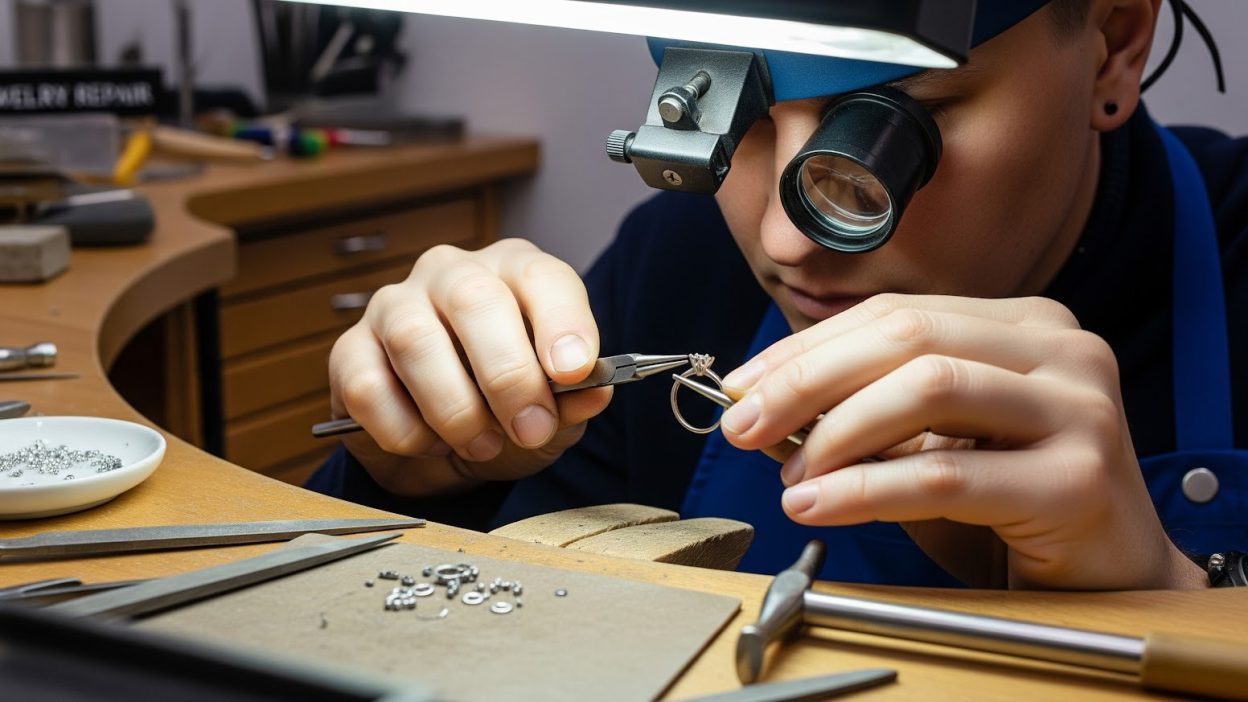
At a professional inspection, a jeweler will examine each prong under magnification, check the stone for movement, assess the overall condition of the setting, and advise you on whether any repair is needed.
Understanding Prong Repair: Re-Tipping vs. Re-Pronging
When a jeweler determines that your prongs need attention, there are two main repair approaches.
Re-Tipping
Re-tipping is the more conservative repair. A small amount of metal is added to the worn tip of an existing prong to build it back up to its original size and shape. This is a less invasive procedure and is suitable when the body of the prong is still structurally sound and the issue is isolated to the tip. Re-tipping typically costs between $25 and $75 per prong, though pricing varies depending on the metal type and the jeweler’s market.
Re-Pronging (Full Prong Replacement)
When a prong has thinned too far, broken at the base, or is otherwise beyond repair through re-tipping, the entire prong must be replaced. This is called re-pronging. The process involves removing the existing prong, building a new one from raw metal, and soldering it securely to the setting before reshaping it around the stone. Re-pronging generally costs between $50 and $150 per prong and may require the stone to be temporarily removed and reset.
In cases where multiple prongs are damaged, a jeweler may recommend replacing the entire head of the setting, which is the portion that holds the stone. This is called a head replacement and typically costs between $150 and $350 depending on the metal and the complexity of the original design.
For local, trusted prong repair services, you can also find a professional jeweler near you to get a hands-on inspection and accurate repair estimate.
Warning Signs That Demand Immediate Attention
There are a few situations where you should stop wearing your ring right away and seek professional evaluation as soon as possible. These include a prong that has visibly broken off, a stone that you can see or feel moving when you touch it, a prong tip that has gone completely flat, or a stone that looks uneven or tilted within the setting. Wearing a ring with a compromised prong dramatically increases the chance of losing the stone permanently.
Wrapping Up: Protecting the Things That Matter Most
Prong wear is a natural and unavoidable part of owning a ring, but losing a precious stone is not inevitable. By learning how to tell if ring prongs are loose with simple at-home checks, being mindful of the activities that accelerate metal wear, and committing to regular professional inspections, you can catch problems long before they turn into losses. A small repair done early is always far less expensive and far less stressful than replacing a lost diamond or gemstone.
If you notice any of the warning signs described in this guide, do not wait. A quick visit for a professional jewelry repair service could save a stone that has been in your family for generations.
Frequently Asked Questions
Q: How do I know if my ring prongs are loose without going to a jeweler?
A: You can perform a few simple tests at home. Hold the ring near your ear and tap it gently — a loose stone will produce a faint rattling sound. You can also press lightly on the stone from multiple angles using a toothpick to check for any movement. Dragging soft cotton fabric across the setting to look for snags from lifted prong tips is another reliable method.
Q: How often should I have my engagement ring prongs checked?
A: For a ring worn daily, having prongs professionally inspected every six to twelve months is a reasonable standard. The more active your lifestyle, the more frequently you should have the setting evaluated.
Q: What is the difference between re-tipping and re-pronging?
A: Re-tipping involves adding new metal to the worn tip of an existing prong that is still structurally intact. Re-pronging means the entire prong is removed and replaced from the base. Re-tipping is less invasive and less expensive, while re-pronging is necessary when the damage extends beyond the tip.
Q: Can a loose prong be fixed the same day?
A: Many jewelers can perform re-tipping repairs in a few hours or offer same-day turnaround. Full re-pronging or head replacements may take longer, depending on the complexity of the repair and the jeweler’s current workload. Always call ahead to ask about timing.
Q: Is it safe to wear my ring if I suspect a prong is loose?
A: It is not recommended. Even a slightly loose prong can allow a stone to shift and eventually fall out, and the risk increases with every hour of wear. It is best to store the ring safely and have it inspected by a professional as soon as possible.
Q: What types of jewelry settings are less prone to prong damage?
A: Bezel settings, which wrap a band of metal entirely around the stone, and channel settings, which recess stones between two parallel rails, offer more protection from impact and wear than traditional prong settings. However, even these settings require periodic professional inspection to ensure the metal has not loosened or thinned over time.